 Pin it
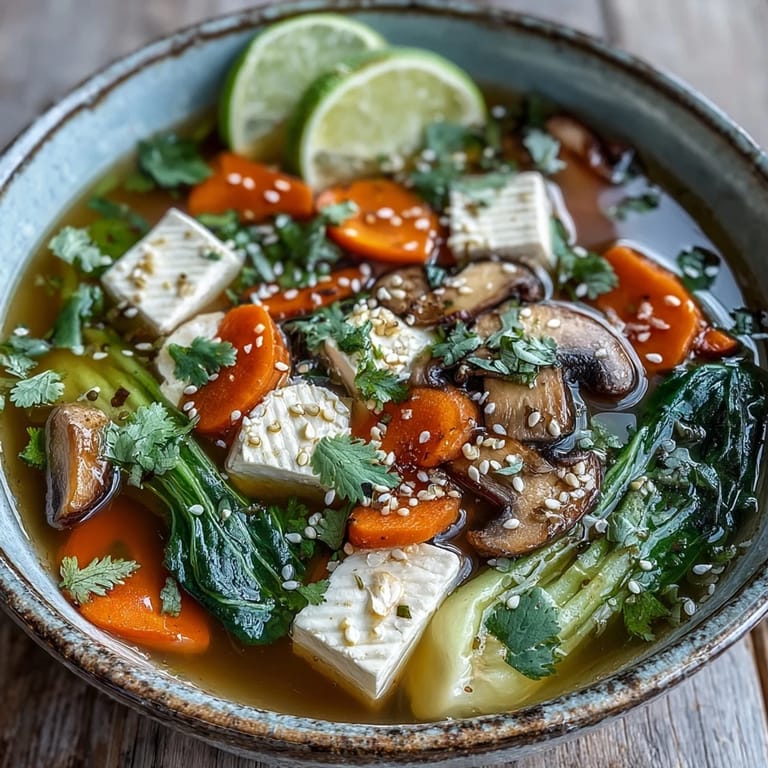
 My neighbor brought over a container of this soup on a rainy Tuesday, and I've been chasing that recipe ever since. There's something about how the silken tofu dissolves on your tongue while the vegetables stay crisp, all swimming in this delicate broth that tastes like it took hours but really didn't. The first spoonful made me close my eyes without meaning to. Now I make it whenever I need something that feels both nourishing and somehow like a warm hug in a bowl.
I made this for my sister when she was sick, and she asked for a second bowl before finishing the first one. That's when I realized this soup does something special—it's simple enough to feel easy on your body, but flavorful enough that you're not eating it out of obligation. She still texts me asking for it.
Ingredients
- Low-sodium vegetable broth (1.5 liters): This is your foundation, so don't skimp on quality—a good broth makes the whole soup sing without any help from salt.
- Soy sauce or tamari (2 tablespoons): Use tamari if you're avoiding gluten, and remember you can always add more but can't take it out, so start conservative.
- Fresh ginger, thinly sliced (1 tablespoon): Slicing instead of mincing gives you these little pockets of intense flavor that surprise you as you eat.
- Garlic, minced (2 cloves): Two cloves keeps it subtle and lets the other ingredients breathe instead of turning everything into garlic soup.
- Sesame oil (1 teaspoon): This is the secret whisper in the background—toasted sesame oil adds a nuttiness that makes people ask what your ingredient is.
- Carrot, julienned (1 medium): The thin cuts mean they stay tender without getting mushy, and they add a natural sweetness to balance the umami.
- Shiitake mushrooms, sliced (100 g): These have an earthiness that deepens the broth, so don't replace them with button mushrooms unless you absolutely have to.
- Baby bok choy, chopped (100 g): The tender leaves wilt perfectly in two minutes, and they add a mild, slightly peppery note that brightens everything.
- Red bell pepper, thinly sliced (1 small): Red peppers are sweeter than green ones and add both color and a subtle fruity undertone to the broth.
- Spring onions, sliced (2): Save these for near the end so they keep their fresh bite and don't turn into soft strings.
- Silken tofu, cubed (300 g): Silken tofu is delicate and custard-like, so handle it gently or it'll break into pieces—which isn't a disaster, just not what you're going for.
- Fresh cilantro leaves (optional): A handful of cilantro at the end adds a bright herbaceous note that makes the soup feel alive.
- Toasted sesame seeds (1 teaspoon optional): These little seeds add a crunch and toasty depth that elevates a simple bowl into something special.
- Lime wedges (optional): A squeeze of lime at the very end ties everything together and cuts through the richness beautifully.
Tired of Takeout? 🥡
Get 10 meals you can make faster than delivery arrives. Seriously.
One email. No spam. Unsubscribe anytime.
Instructions
- Heat the aromatics:
- Pour that teaspoon of sesame oil into your pot over medium heat and let it get warm enough that it shimmers when you tilt the pan. Toss in your minced garlic and sliced ginger, and within a minute the whole kitchen will smell incredible—that's your signal to keep stirring so nothing burns.
- Build your broth:
- Pour in the vegetable broth and soy sauce and let it come to a gentle simmer, not a rolling boil. You want little bubbles lazily breaking the surface, which means the flavors will develop evenly without harsh boiling.
- Start with the sturdy vegetables:
- Add your julienned carrot, mushroom slices, and bell pepper strips. These need about five minutes to soften slightly while staying just a bit firm, so set a timer if you're easily distracted like I am.
- Add the tender greens:
- Throw in your bok choy and spring onions and let them cook for just two to three minutes—they go from raw to perfect in an instant, and overcooked greens turn bitter and sad.
- Introduce the tofu gently:
- This is where you slow down and show respect to the tofu. Carefully nestle those cubes into the simmering broth and give them just two minutes to warm through, resisting the urge to stir them around.
- Taste and adjust:
- Dip a spoon in and think about what you're tasting—does it need more soy sauce, or is it just right? Remember that salt tastes stronger hot than it does when the soup cools, so be gentle.
- Serve with intention:
- Ladle soup into bowls, making sure each one gets tofu and vegetables distributed fairly. Top with cilantro, sesame seeds, and a squeeze of lime, and watch people's faces light up.
 Pin it
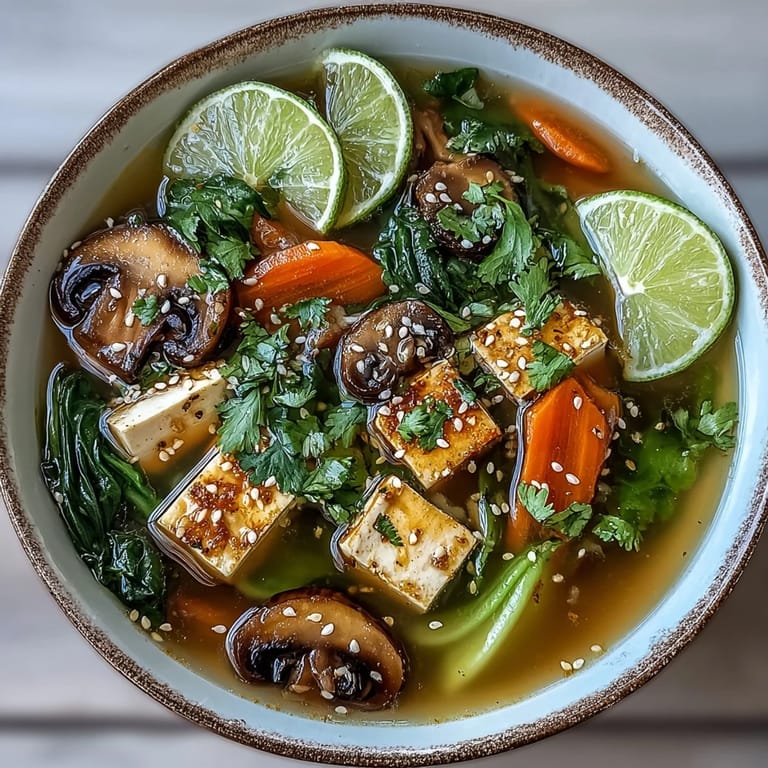
 My friend brought her teenage daughter over, and the girl—who normally picks at everything—asked for seconds and mentioned how the tofu tasted like nothing but somehow like everything at the same time. That's when I understood that this soup does something almost meditative. It doesn't shout or demand attention; it just quietly makes you feel better.
Why This Soup Works When Nothing Else Does
There's a reason this soup appears in kitchens across Asia and why people keep coming back to it. It's built on restraint—nothing is overpowering, and instead of fighting for attention, each ingredient has its moment. The broth stays clear and delicate because you're not dumping in cream or complicated spice blends, and that's actually what makes it feel sophisticated rather than simple.
Customizing Without Losing the Magic
I've experimented with swapping vegetables based on what's in my fridge or what the season offers. Snow peas bring a sweet crunch, napa cabbage adds more substance, and enoki mushrooms give you these delicate wispy textures that are honestly fun to eat. The core stays the same, but you're never bored.
Making It Your Own
This is a canvas you can adjust based on your mood and what you're working with. If you want heat, a drizzle of chili oil or some fresh sliced chili stirred in at the end transforms it into something more assertive. If you prefer a heartier bowl, using firm tofu instead of silken gives you cubes that hold their shape and provide more texture. The beauty is that the foundation is so solid that these changes feel like evolution rather than betrayal.
- Start spicy if you're uncertain—you can always tone it down, but you can't unkick a soup that's too mild.
- If you're meal prepping, store the broth and vegetables separate from the tofu so nothing gets mushy or falls apart.
- Leftovers taste even better the next day once all the flavors have had time to get acquainted.
 Pin it
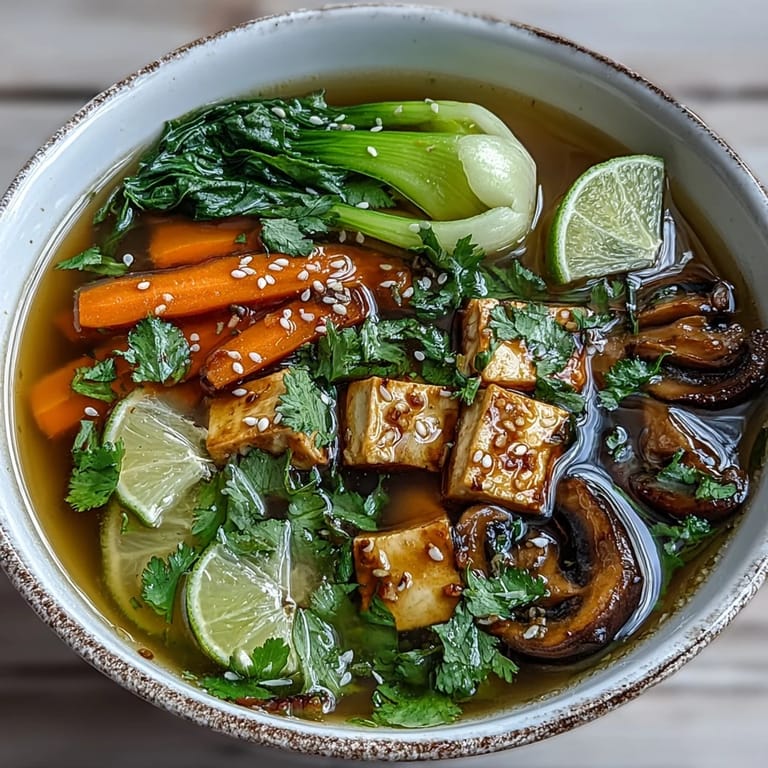
 This soup has become my answer to almost everything—a bad day, a friend who needs comfort, a random Tuesday that needs a moment of peace. It takes thirty minutes and tastes like you care, which, turns out, is exactly what most of us are hungry for.
Recipe Q&A
- → Can I use firm tofu instead of silken?
Yes, firm tofu works well if you prefer more texture and substance in your soup. It will hold its shape better during simmering.
- → How long does this soup keep in the refrigerator?
The soup will keep for 3-4 days when stored in an airtight container in the refrigerator. Reheat gently to avoid breaking up the tofu.
- → Can I make this soup spicy?
Absolutely. Add a dash of chili oil or fresh sliced chili peppers during the final minutes of cooking for a spicy kick.
- → What other vegetables can I add?
Snow peas, napa cabbage, enoki mushrooms, or spinach are excellent additions. Add heartier vegetables earlier and delicate greens near the end.
- → Is this soup freezer-friendly?
While it can be frozen, the texture of silken tofu may become slightly grainy. For best results, freeze the broth and vegetables separately, then add fresh tofu when reheating.