 Pin it
 My neighbor brought over a container of Maryland crab cakes last summer, and I watched her fry them in a cast-iron skillet while we talked on the porch. The butter hit the pan with that perfect sizzle, and within minutes the kitchen smelled like the coast—briny, buttery, alive. I've been chasing that moment ever since, perfecting the balance between letting the sweet crab meat shine and adding just enough binding to hold everything together without crushing those precious lumps.
I made these for a small dinner party once, and my sister who claims she never eats seafood asked for seconds. Watching someone surprise themselves with food is its own kind of magic, especially when they're dipping a golden cake into that mustard-forward sauce and closing their eyes a little.
Ingredients
- Lump crab meat (450g): This is where quality truly matters—look for fresh crab with no shell fragments, or use frozen if fresh isn't available, just thaw gently first.
- Large egg: Acts as a quiet binder, holding everything together without overwhelming the delicate crab flavor.
- Mayonnaise (60g for cakes, 120g for sauce): Creates moisture and richness; don't skip or substitute with Greek yogurt, as the texture needs that specific emulsification.
- Dijon mustard (1½ tsp and 1 Tbsp): Adds a gentle heat and complexity that makes people ask what the secret ingredient is.
- Worcestershire sauce (1 tsp): One teaspoon feels small until you taste what it does—a whisper of umami that deepens everything.
- Old Bay seasoning (1 tsp): The classic choice for crab, though any quality seafood seasoning works if you're cautious with salt.
- Fresh lemon juice (1 Tbsp and 1 Tbsp): Brightness that prevents the cakes from feeling heavy or one-dimensional on the palate.
- Fresh parsley (2 Tbsp, chopped): A color note and fresh herbaceous whisper that shouldn't be skipped.
- Spring onions (2, sliced): Mild onion flavor that softens as they cook, adding subtle sweetness rather than sharp bite.
- Panko breadcrumbs (60g): Coarser than regular breadcrumbs, they create that satisfying crunch without compressing into a dense cake.
- Salt and black pepper: Season thoughtfully—remember the crab and Worcestershire already carry salt.
- Butter and neutral oil (2 Tbsp each): The combination gives you the nuttiness of butter with the higher smoke point of oil so nothing burns.
- Garlic clove (1 small, minced for sauce): Raw garlic adds a bright, peppery note that makes the sauce taste alive.
- Hot sauce (1 tsp, optional): If you use it, choose something that adds heat without drowning out the other flavors.
Tired of Takeout? 🥡
Get 10 meals you can make faster than delivery arrives. Seriously.
One email. No spam. Unsubscribe anytime.
Instructions
- Gather and prep your mise en place:
- Before you touch the crab meat, have everything measured and ready. This is a recipe where you need both your hands free and your attention undivided once you start assembling.
- Combine the crab mixture with a gentle hand:
- In a large bowl, fold together the crab meat, egg, mayonnaise, Dijon mustard, Worcestershire, Old Bay, lemon juice, parsley, and spring onions. Add the panko last, folding it in slowly—every time you overmix, you're breaking apart those precious lumps of crab that give these cakes their texture and identity. Taste, then season with salt and pepper, remembering that the Worcestershire carries salt.
- Shape the cakes and let them rest:
- Divide the mixture into 8 equal portions and gently shape them into patties about 2½ inches across. Place them on a plate, cover loosely, and refrigerate for at least 15 minutes—this time lets the panko absorb some moisture and helps everything hold together in the pan.
- Make the sauce while you wait:
- Whisk together the mayonnaise, Dijon mustard, lemon juice, hot sauce if using, and minced garlic in a small bowl. Season with salt and pepper. The sauce should taste tangy and herbaceous, a little sharp on the finish.
- Heat your pan with intention:
- Combine butter and oil in a large nonstick skillet and place it over medium heat. Let it warm until the butter is fully melted and the mixture shimmers—this takes about a minute or two and is worth waiting for.
- Fry the cakes until they're golden and set:
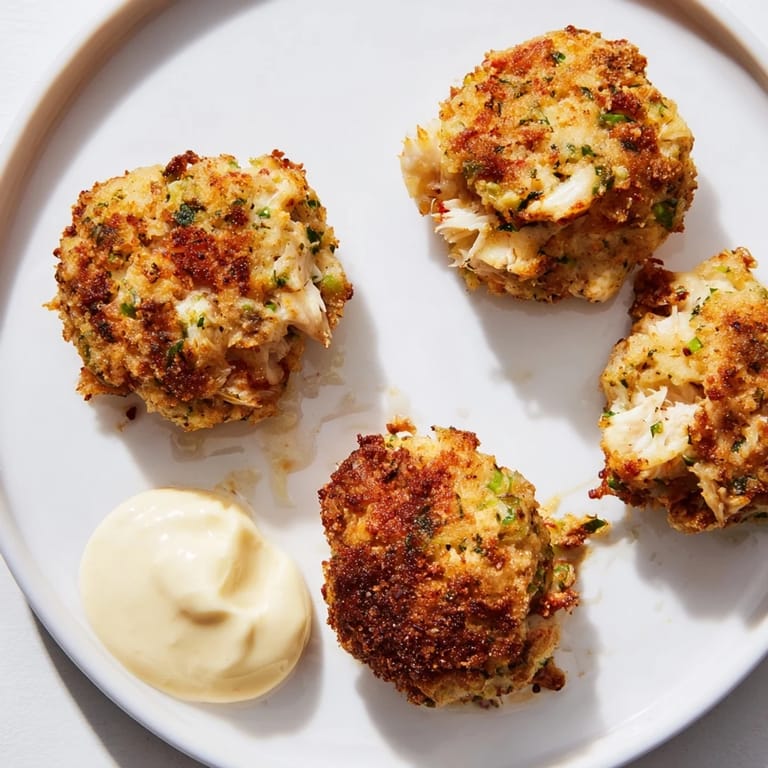
- Carefully lay the crab cakes in the hot pan, working in batches so you're not crowding anything. Let them cook undisturbed for 3 to 4 minutes on the first side—you'll see the edges turn golden and hear a gentle sizzle. Flip with care, then cook the other side for another 3 to 4 minutes until that side is equally golden and the cake feels set when you press it gently with the back of your spatula.
- Drain and serve with warmth:
- Transfer the finished cakes to a plate lined with paper towels to drain any excess oil. Serve them while they're still warm, alongside the tangy sauce and a wedge of lemon if you like.
 Pin it
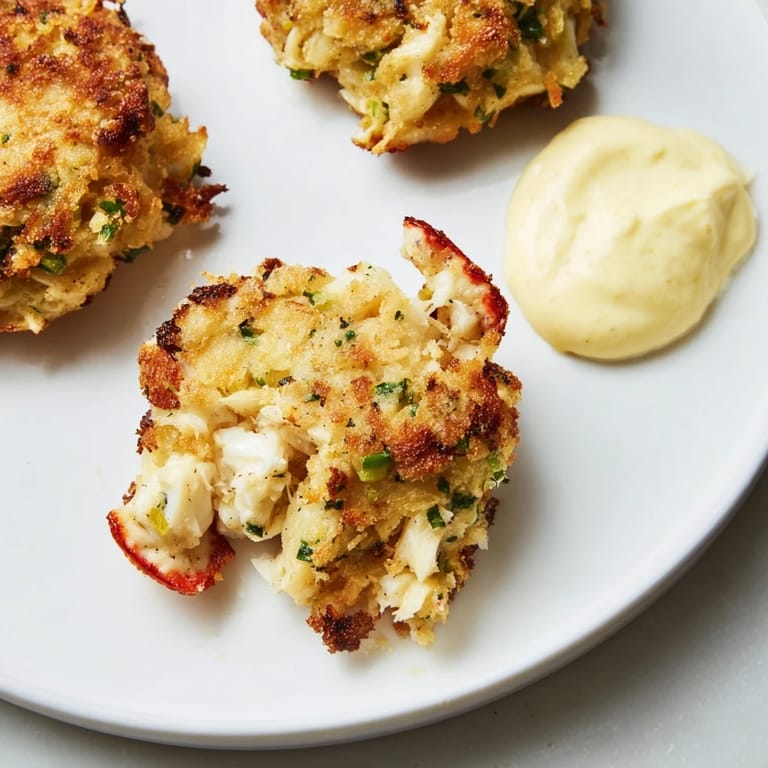
 The first time someone bit into one of my crab cakes and their whole face changed—that moment of tasting something fresh and flavorful and realizing they could make it at home—that's when this recipe stopped being instructions and became something I wanted to share. These cakes feel fancy but taste honest, like the ocean didn't need a lot of help becoming dinner.
The Right Pan Makes All the Difference
Nonstick is your friend here because crab cakes benefit from a confident flip, and you need to know they won't stick. I've tried cast iron, and while it works, the temperature is harder to control and the cakes can brown too quickly on the outside before cooking through. A good nonstick skillet gives you even heat and the confidence to move them without anxiety.
Variations That Still Taste True
Some people add a little grated onion or celery for more texture, others skip the spring onions entirely. I've experimented with swapping panko for crushed saltines or even a bit of crumbled corn flakes for extra crunch. The core of what makes a crab cake work—good crab, careful binding, and a proper sear—stays the same. Everything else is playing at the edges.
Serving and Pairing
Crab cakes don't need much companionship, but they welcome it. I serve mine with a bright coleslaw dressed in vinaigrette, or a simple green salad that echoes the lemon notes in the sauce. A cold Sauvignon Blanc or dry Riesling sits beside them perfectly—something crisp and mineral that won't fight with the seafood.
- Leftover crab cakes can be gently reheated in a low oven for about 10 minutes, though they're best eaten fresh and still warm from the pan.
- The sauce keeps refrigerated for several days and works on other seafood or even as a condiment for fish tacos.
- You can shape the cakes ahead, refrigerate them overnight, and fry them whenever you're ready.
 Pin it
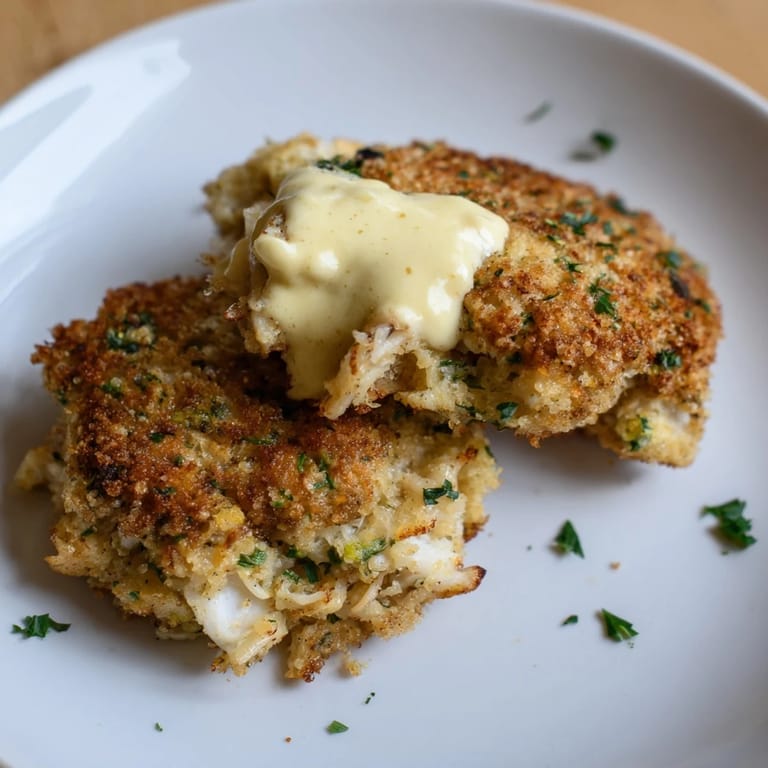
 These crab cakes are the kind of dish that feels like a small luxury on an ordinary Tuesday, and that's the whole point. Make them when you want to remember why good ingredients and a little care can turn a simple dinner into something worth lingering over.
Recipe Q&A
- → What type of crab meat works best?
Fresh lump crab meat is ideal for the best flavor and texture, but quality canned crab can be used as a convenient alternative.
- → How can I achieve a crispy exterior?
Coating the patties lightly with extra panko breadcrumbs before frying enhances crispiness and adds a crunchy crust.
- → What is the purpose of chilling the patties?
Refrigerating the formed patties helps them set firmly, preventing breakage during cooking and maintaining their shape.
- → Can the tangy sauce be adjusted for spice?
Yes, adding or omitting hot sauce in the tangy mixture allows control over the level of heat according to preference.
- → What sides pair well with these crab patties?
Crisp salads, coleslaw, or light white wines like Sauvignon Blanc complement the rich seafood flavors nicely.
- → Which cooking fats are recommended?
A combination of unsalted butter and neutral oil provides flavor and a high smoking point to ensure even frying.