 Pin it
 There's something about the sound of a hot skillet meeting cold beef that signals dinner is about to get exciting. My first fajita adventure happened almost by accident, on a weeknight when I was trying to salvage some flank steak and a handful of peppers before they wilted away. I'd thrown together a quick lime-and-cumin marinade out of sheer desperation, and within forty minutes, I was standing over a pan listening to that magnificent sizzle while my kitchen filled with smoke and spice. My partner wandered in mid-cook, drawn by the aroma alone, and we ended up standing shoulder to shoulder at the stove, passing tortillas back and forth. That night taught me that fajitas aren't just food—they're permission to make a little controlled chaos in your kitchen and call it dinner.
I made these for a casual dinner party where someone was on a strict gluten-free diet, and I realized these fajitas were the perfect excuse to use corn tortillas anyway. The way they charred slightly on my cast iron skillet, the smell of that caramelization—it transformed what could have been a limitation into the star of the meal. Everyone went back for seconds, and it became clear that sometimes the best meals are the ones where you stop overthinking it.
Ingredients
- Flank or skirt steak, thinly sliced: This cut is lean and full of flavor, and slicing it thin means it cooks fast and stays tender—the textural contrast with the peppers is essential.
- Olive oil: Your backbone for both marinade and cooking; don't skimp here, it affects everything.
- Lime juice and garlic: These two brighten the beef and cut through richness—fresh is non-negotiable.
- Cumin, smoked paprika, chili powder: The holy trinity that makes these taste like fajitas, not just sautéed beef.
- Red, yellow, and green bell peppers: The colors aren't just pretty; each has a slightly different sweetness and cook time, giving you depth.
- Onion: Sliced thick enough to hold its shape but thin enough to caramelize properly.
- Warm tortillas: Corn or flour—your choice—but warming them is the difference between good and unforgettable.
Tired of Takeout? 🥡
Get 10 meals you can make faster than delivery arrives. Seriously.
One email. No spam. Unsubscribe anytime.
Instructions
- Build your marinade:
- Whisk together olive oil, lime juice, minced garlic, cumin, smoked paprika, chili powder, salt, and pepper in a bowl. This is where flavor lives, so don't rush it. Add your steak strips, toss them until every piece is coated, and let them sit for at least 15 minutes—longer in the fridge if you have time, as the acid and spice will penetrate deeper.
- Sear the beef hot and fast:
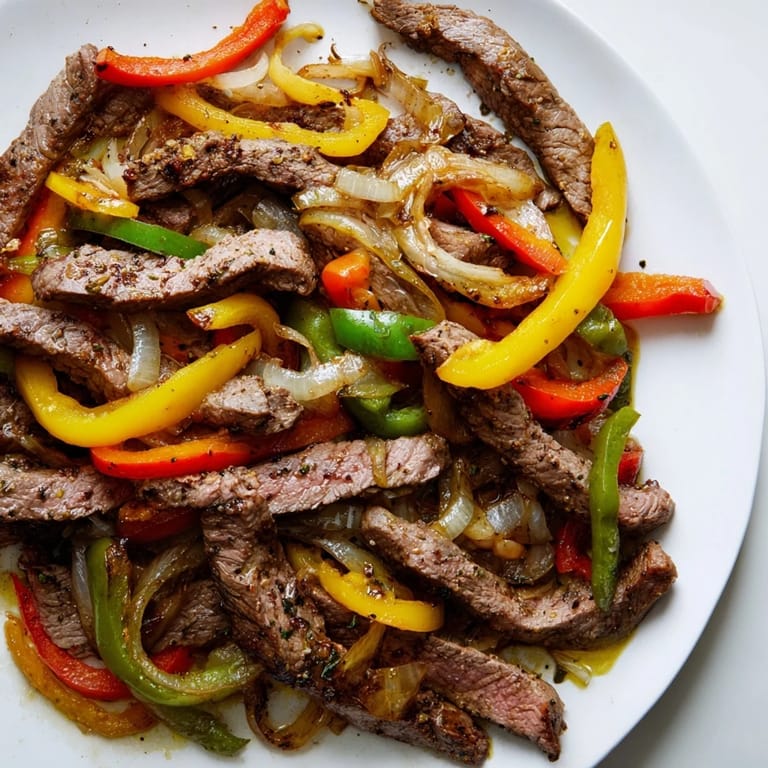
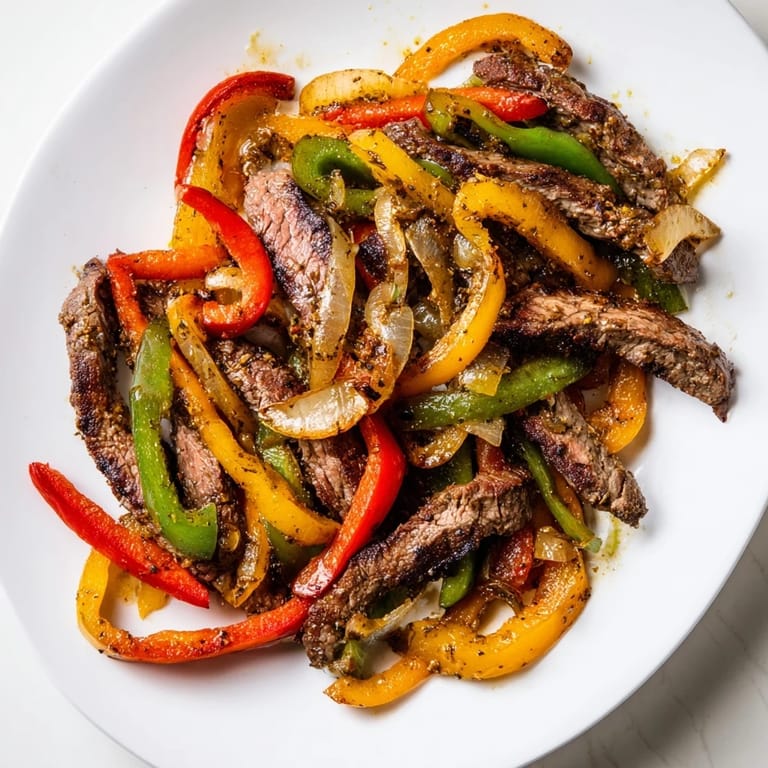
- Heat one tablespoon of olive oil in a large skillet over medium-high heat until it shimmers and barely smokes. Working in a single layer is crucial here; crowding the pan drops the temperature and you'll steam instead of sear. Lay the steak strips down and don't move them for 2 to 3 minutes per side until they're deeply browned. The crust is where all the flavor lives.
- Cook the peppers and onions until they blush:
- Remove the seared steak to a warm plate, add the remaining tablespoon of oil to the same skillet, and toss in your sliced peppers and onions. Let them sauté for 5 to 7 minutes, stirring occasionally, until they soften and develop those dark, caramelized edges. You want them tender but still with a bit of character.
- Bring it all together:
- Return the steak to the skillet, toss everything for 1 to 2 minutes until the whole mixture is sizzling and hot, and then immediately transfer to a serving platter. The final sizzle is part of the experience—it's that auditory cue that everything's ready.
 Pin it
 I learned the real magic of fajitas the night my neighbor stopped by mid-cook, lured in by the smell, and we ended up making three batches because word spread through the building. There's something deeply social about a meal where everyone gets to customize their own plate—it turns dinner into conversation, into choice, into ownership of what you're eating.
The Art of the Marinade
The marinade is where your fajitas get their soul. That combination of lime juice and garlic creates an acidic base that begins breaking down the muscle fibers in the beef the moment it touches the meat, which sounds scientific but feels like magic when you bite into that tender result. Cumin brings earthiness, smoked paprika adds depth and a subtle smokiness that makes people ask what you're grilling, and the chili powder gives you a whisper of heat without overwhelming. I've experimented with marinating for just 15 minutes when I'm in a rush, and it works fine, but if you can give it an hour or two in the refrigerator, the flavors marry together and the beef becomes noticeably more tender.
Choosing Your Peppers
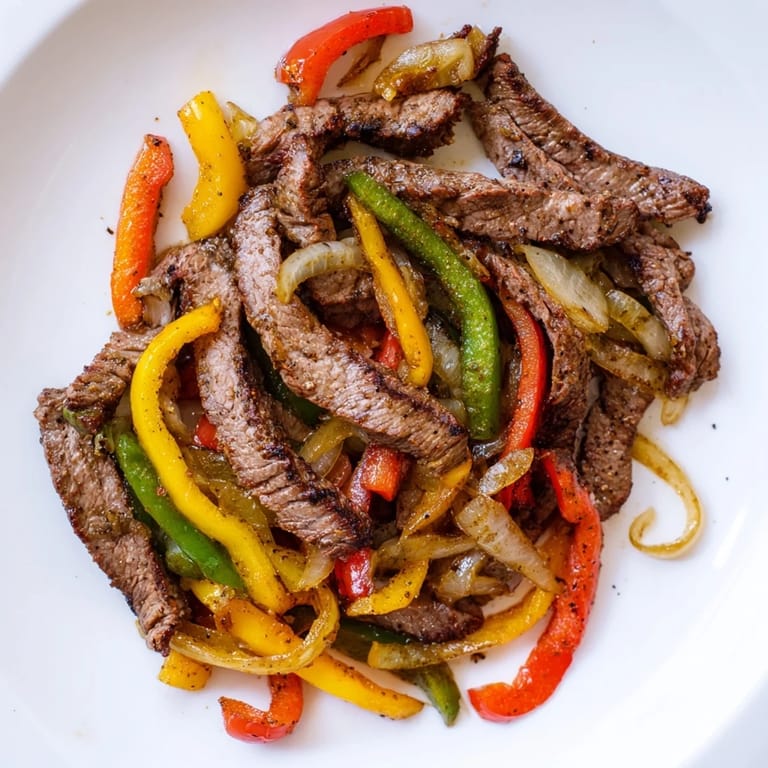
There's a reason traditional fajitas use a mix of red, yellow, and green peppers—it's not just visual. Green peppers cook slightly faster and have a grassy, almost vegetal bite that contrasts nicely with the rich beef. Red and yellow peppers are sweeter and more mellow, adding body and a softer finish. If you only have one color on hand, don't stress; use what you've got. What matters more is slicing them all roughly the same thickness so they cook evenly and develop that crucial char that adds bittersweet depth.
Building Your Perfect Plate
The beauty of fajitas is that everyone becomes their own chef. I've found that warmed tortillas, a generous scoop of the sizzling beef-and-pepper mixture, and then you pause and let people choose their own adventure. Some prefer just a squeeze of lime and cilantro; others load up with sour cream, salsa, cheese, and avocado until the tortilla can barely hold it together. The key is respect—respect the warmth of the tortillas, respect the sizzle of the filling, and respect that what feels like the perfect bite to you might need more heat or more cool, more soft or more crunch from the person sitting across from you.
- Always warm your tortillas, either in a dry skillet for 30 seconds per side or wrapped in a tea towel while everything cooks.
- Set out toppings in small bowls so people can see their options and build without hesitation.
- Have lime wedges front and center—that final squeeze is often the difference between good and memorable.
 Pin it
 Fajitas remind me that some of the best dinners are the ones where the kitchen gets a little loud and the table gets a little crowded. This recipe is your permission slip to make that happen.
Recipe Q&A
- → What cut of beef works best for fajitas?
Flank steak or skirt steak are ideal for fajitas due to their texture and flavor. Thinly slicing these cuts helps them cook quickly and remain tender.
- → How long should the beef marinate?
Marinating for at least 15 minutes allows flavors to develop, but letting it rest 1–2 hours in the fridge enhances tenderness and taste.
- → Can I use other vegetables besides bell peppers?
Yes, onions are commonly sautéed with the peppers. You can also add mushrooms or zucchini for extra variety.
- → What cooking method is recommended?
Pan-searing in a hot skillet allows the beef to brown nicely while the vegetables soften with a slight char, preserving texture and flavor.
- → Are there suitable serving suggestions?
Warm tortillas complemented by fresh toppings like cilantro, lime wedges, avocado or guacamole, sour cream, and salsa enhance the overall dish.