 Pin it
 My kitchen smelled like caramelized sweetness the afternoon my neighbor dropped off a bundle of beets from her garden, their soil still clinging to the roots. I'd never roasted beets before, only boiled them into submission, so I wrapped them in foil on a whim and let the oven do the work. Forty-five minutes later, when I peeled back that foil, the transformation was almost shocking—deep crimson, tender, impossibly sweet. That's when I understood what roasting could do, and this soup became my way of celebrating that discovery.
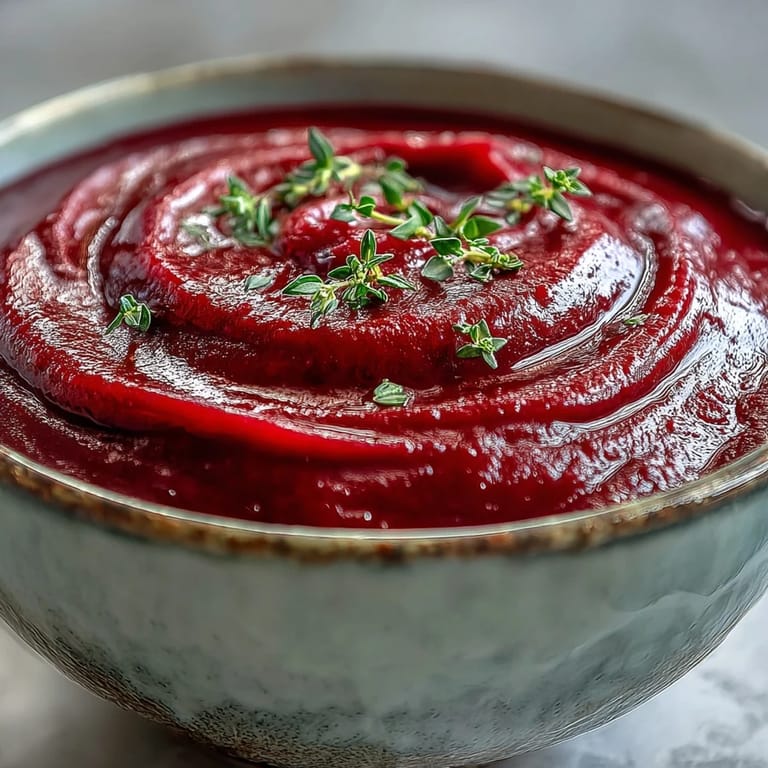
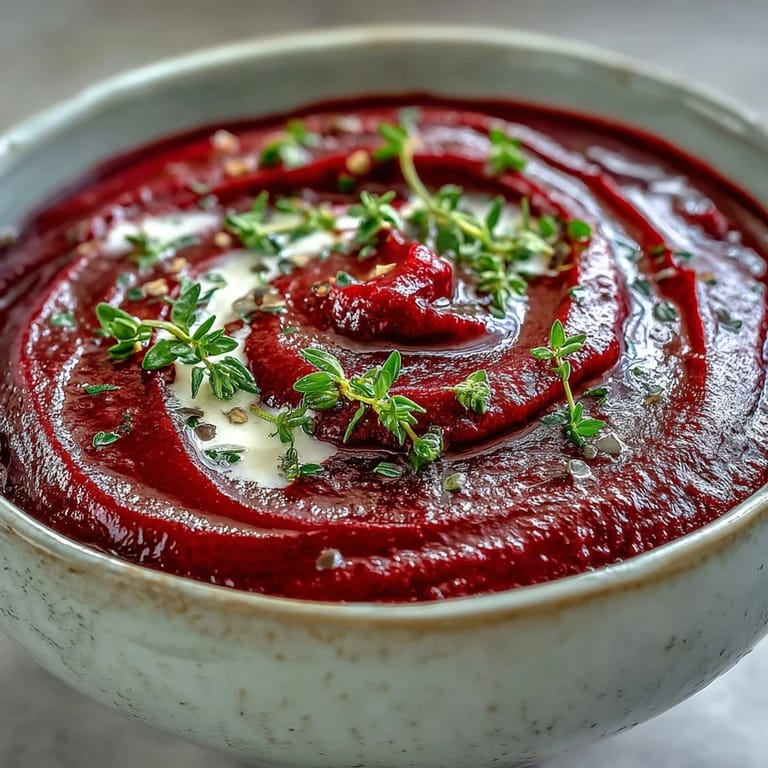
I made this soup for my partner on a cold Tuesday when the farmers market had an entire display of beets so gorgeous I couldn't choose just one variety. We sat at the kitchen counter while it simmered, and the whole apartment turned the most beautiful shade of burgundy from the steam—he joked that I was accidentally tie-dyeing our walls. When I ladled it into bowls and added that final drizzle of cream, he actually put his phone down, which never happens.
Ingredients
- Beets (4 medium): Roasting concentrates their natural sweetness and makes them peel like butter instead of wrestling with them raw—this is the whole game right here.
- Yellow onion (1 medium, diced): The aromatic backbone that softens into the soup and adds complexity without any bite.
- Carrots (2 medium, peeled and diced): They brighten the earthy flavors and add natural sweetness that balances the beets perfectly.
- Garlic (2 cloves, minced): A minute in hot oil releases its fragrance and keeps the soup from tasting one-dimensional.
- Vegetable broth (4 cups): Use something you'd actually drink—low-quality broth will taste tinny, and your soup deserves better.
- Olive oil (1 tablespoon): Just enough to bloom the aromatics without making the soup greasy.
- Heavy cream (1/2 cup): This is what makes it velvety; coconut cream works beautifully if you're avoiding dairy and adds its own richness.
- Salt and black pepper: Taste as you go—beets can be surprisingly sweet, so you might need more salt than you'd expect.
- Fresh lemon juice (1 tablespoon): The secret weapon that brightens everything and makes the beet flavor pop instead of sink.
- Fresh thyme (1 teaspoon leaves): Dried works in a pinch, but fresh thyme brings an herbal grace that dried can't quite match.
Tired of Takeout? 🥡
Get 10 meals you can make faster than delivery arrives. Seriously.
One email. No spam. Unsubscribe anytime.
Instructions
- Roast the beets until they surrender:
- Preheat your oven to 400°F and wrap each beet snugly in foil—this steams them gently while the dry heat caramelizes their sugars. They're ready when a fork slides through like butter, usually around 40 to 45 minutes, and the smell alone will make you excited about what's coming.
- Cool and peel with ease:
- Let the foil packets sit for a few minutes so you don't burn your fingers, then the papery skin slips right off under cool running water. Your hands will turn deep purple no matter what, so embrace it like a badge of honor.
- Soften the aromatics:
- Heat olive oil in a large pot over medium heat and add your diced onion and carrots, letting them turn tender and golden for about 5 minutes. The kitchen will smell like the beginning of something delicious, and you'll know it's working when the onions turn translucent.
- Wake up the garlic:
- Add your minced garlic and cook for just 1 minute—this is crucial because any longer and it turns bitter, but any less and it stays raw and sharp. You'll smell the shift the moment it's right.
- Combine and season:
- Stir in your chopped roasted beets along with fresh thyme, salt, and pepper, letting everything mingle for a minute or two. This is when you start to see the beautiful deep color come alive in the pot.
- Simmer to deepen flavors:
- Pour in your vegetable broth and bring the whole thing to a boil, then lower the heat and let it bubble gently for 10 minutes. Those extra minutes let the flavors marry and become something greater than their individual parts.
- Blend until silky:
- Remove from heat and use an immersion blender to purée everything into a smooth, velvety texture—or work in batches with a regular blender if that's what you've got. The transformation from chunky to creamy happens almost instantly and feels genuinely magical.
- Finish with cream and brightness:
- Stir in your heavy cream and fresh lemon juice, then taste and adjust your seasonings because this is your moment to make it perfect. That squeeze of lemon is what prevents this from tasting heavy and one-note.
 Pin it
  Pin it
 The first time someone asked me to make this soup for a dinner party, I worried I was boring them with something so simple and straightforward. Instead, they spent half the meal talking about the color, the texture, the way the cream swirled into those deep purples—it reminded me that sometimes the most elegant things come from just letting good ingredients be themselves.
The Magic of Roasting
There's something almost chemical about what happens when you roast beets instead of boiling them—the heat concentrates their natural sugars and creates this caramelized complexity that you absolutely cannot achieve any other way. I used to think I didn't like beets until I tried them roasted, and now I actually crave them. The foil wrapping is important because it creates a little steam chamber that cooks them evenly while trapping all those volatile compounds that make them taste so alive.
Blending Technique Matters
An immersion blender is genuinely the best tool for this because you can control the texture exactly as you want it and feel the soup transition from chunky to smooth right in your hands. If you're using a countertop blender, let the soup cool for a few minutes first and fill it only halfway—otherwise you'll end up with soup on your ceiling, which I promise is not as fun as it sounds. The key is patience: small batches, secure lid, hand on top just in case.
Serving and Pairing Ideas
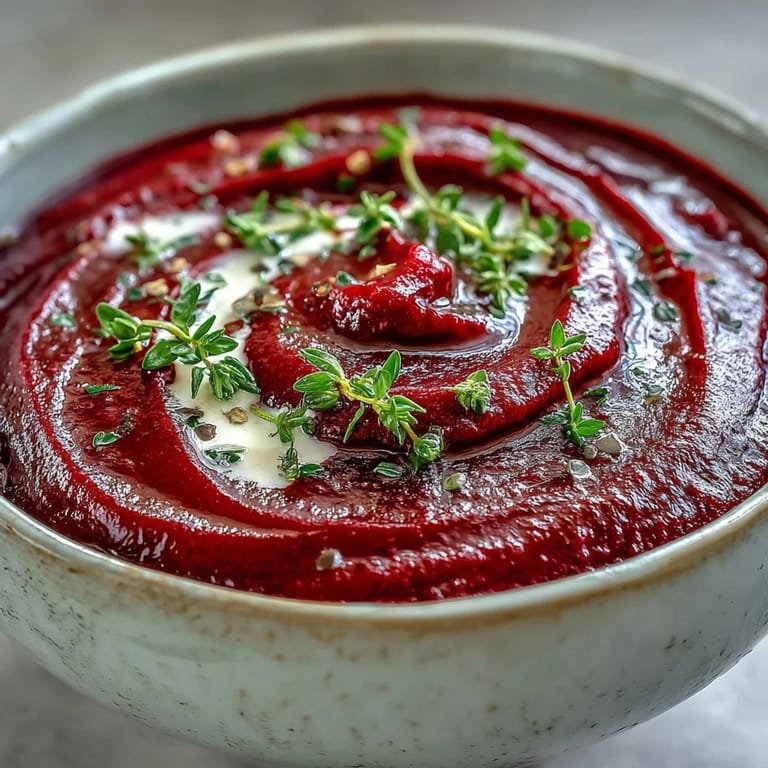
This soup is honestly perfect on its own, but I've learned that a simple garnish turns it from nice into memorable—a final swirl of cream, a small handful of fresh thyme leaves, maybe some crumbled goat cheese if you're feeling fancy. It pairs beautifully with crusty bread for soaking up every last drop, and a crisp white wine makes the whole meal feel special without requiring any actual effort. The soup also keeps beautifully for three days in the refrigerator and reheats gently on the stovetop, making it ideal for meal prep or impromptu dinner guests.
- Crumbled goat cheese adds tanginess that cuts through the richness perfectly.
- Toasted pumpkin seeds bring a textural contrast and nutty flavor you weren't expecting.
- A tiny pinch of smoked paprika on top adds depth without changing what the soup fundamentally is.
 Pin it
  Pin it
 This soup has become my answer when someone asks what to make for a vegetarian friend, a dinner party, or just a Wednesday night when you want something that tastes both comforting and a little bit refined. Make it once and it becomes a reliable friend in your kitchen.
Recipe Q&A
- → Can I make this soup vegan?
Yes, simply substitute the heavy cream with coconut cream or any plant-based cream alternative. The soup will maintain its velvety texture and rich flavor.
- → How do I know when the beets are done roasting?
Beets are ready when they're tender enough to pierce easily with a fork, typically after 40-45 minutes at 400°F. The skin should slip off easily once cooled.
- → Can I use pre-cooked beets to save time?
While you can use pre-cooked beets, roasting fresh beets develops a deeper, more concentrated earthy sweetness that significantly enhances the soup's flavor profile.
- → What garnishes work best with beet soup?
A swirl of cream, crumbled goat cheese, fresh thyme, chopped chives, or toasted pumpkin seeds all complement the earthy sweetness beautifully and add textural contrast.
- → How should I store leftover soup?
Store in an airtight container in the refrigerator for up to 4 days. Reheat gently on the stovetop, adding a splash of broth if needed to adjust consistency.
- → Why add lemon juice to beet soup?
The lemon juice brightens the earthy flavors and balances the natural sweetness of the beets, creating a more complex and vibrant taste profile.