 Pin it
 There's a particular moment each April when I spot the first bundles of asparagus at the market, standing upright like tiny green soldiers, and I know soup season has arrived. My neighbor once asked why I got so excited about a vegetable, and I couldn't quite explain it until she tasted this soup—something about the way fresh asparagus transforms into something silky and luxurious made her understand instantly. It's become my default move when spring decides to show up and stay for a while.
I made this for my sister during her first week working from home, back when we were all adjusting to the strangeness of it all. She showed up at my door at lunch looking completely frazzled, and I had a bowl of this waiting—still warm, with those bright green tips floating on top like little reminders that things could still be beautiful. She sat at my kitchen counter and didn't say much, just ate slowly, and by the end she seemed like herself again.
Ingredients
- Fresh green asparagus (500 g, trimmed and cut into 2 cm pieces): The foundation of everything here—look for firm spears with tight tips, and save those tips for garnish because they're too pretty to blend away.
- Leek (1 medium, white and light green parts only, sliced): This is where the soup gets its gentle sweetness, way more subtle than onion alone, and the white parts are where the real magic lives.
- Onion (1 small, chopped): Just enough to build flavor without overpowering the delicate asparagus.
- Potato (1 medium, peeled and diced): Your secret weapon for that silky texture without any actual cream tricks—it naturally thickens as it breaks down.
- Vegetable broth (1 L): Use the good stuff if you can, because it's basically your entire flavor base here.
- Heavy cream (150 ml): The final touch that turns good into absolutely luxurious.
- Unsalted butter (2 tbsp): Don't skip this—it carries flavor in a way oil just can't.
- Salt, freshly ground black pepper, and nutmeg: Season as you taste, and that nutmeg pinch is optional but completely changes the game if you're brave enough.
- Fresh lemon juice (1 tbsp): This brightens everything at the very end and keeps the soup from tasting one-note.
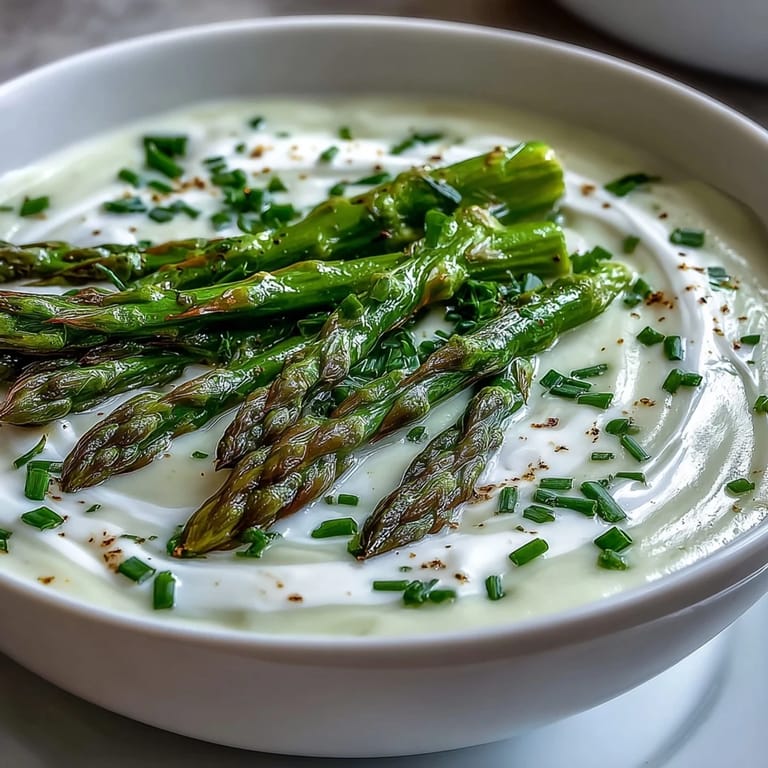
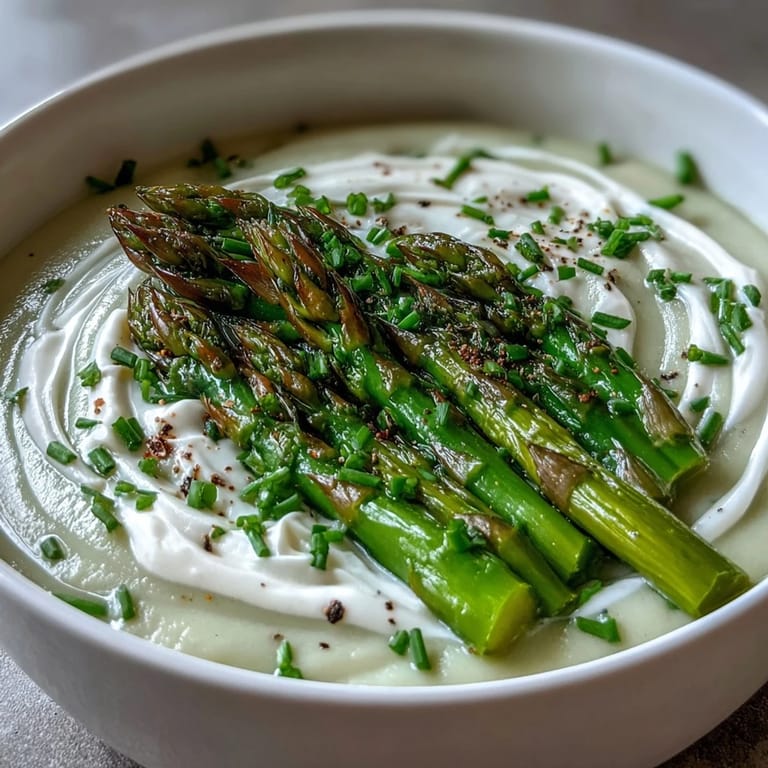
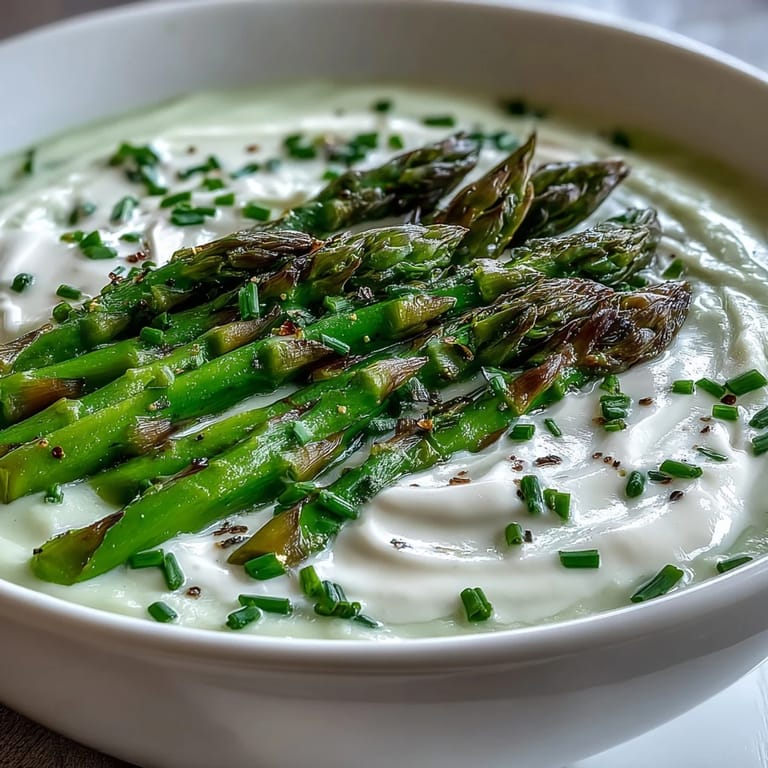
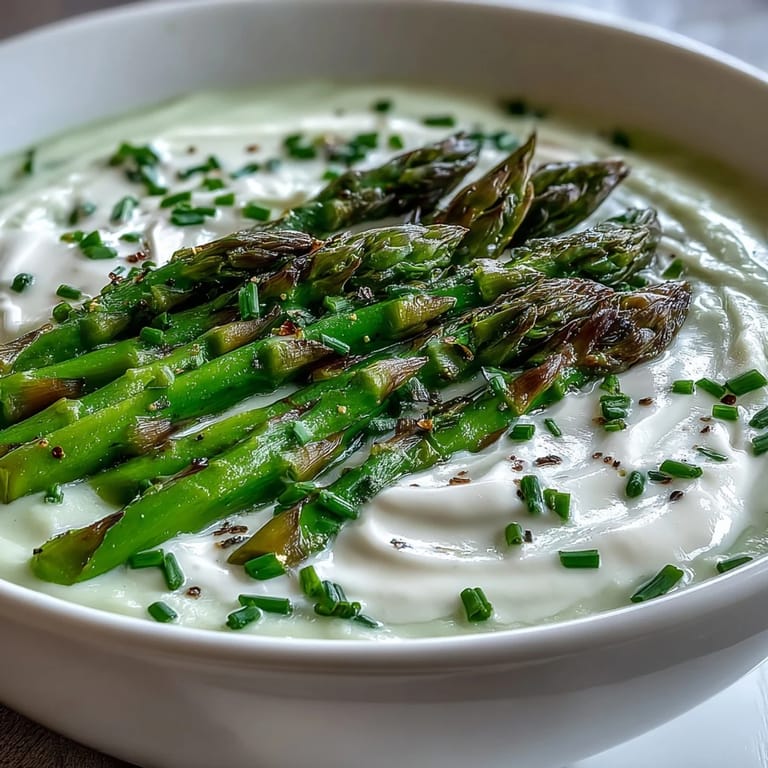
- Garnish (blanched asparagus tips, fresh chives or parsley): The visual payoff that makes people think you spent all day on this.
Tired of Takeout? 🥡
Get 10 meals you can make faster than delivery arrives. Seriously.
One email. No spam. Unsubscribe anytime.
Instructions
- Start with a gentle sauté:
- Melt the butter over medium heat and add your onion, leek, and potato pieces, letting them soften for about 4–5 minutes until they're tender but haven't taken on any color. You're building a quiet foundation here, not browning anything—just encouraging them to release their flavors into the butter.
- Introduce the asparagus stalks:
- Add those reserved asparagus stalks (keeping the tips safe for later) and cook for 2 minutes more, just until they start to smell like spring. This brief moment sets the tone for everything that follows.
- Pour in the broth and let it simmer:
- Add your vegetable broth, bring it to a boil, then dial the heat back and let it bubble gently for about 15 minutes until all the vegetables have completely softened. You'll notice the broth turning a pale green—that's exactly what you want.
- Blanch the asparagus tips separately:
- While the main soup is simmering, get a small pot of salted water boiling and drop in those reserved asparagus tips for just 1–2 minutes until they're bright green and tender. Drain them immediately and set aside—they're your prize.
- Blend until silky smooth:
- Using an immersion blender right in the pot (or working in batches with a countertop blender if that's what you have), puree everything until there's not a single vegetable chunk left. The potato will have already started breaking down, so the blending comes easy.
- Finish with cream and brightness:
- Stir in the cream and bring the soup back to a gentle simmer, then taste and season with salt, pepper, and that optional pinch of nutmeg. Finally, squeeze in the lemon juice—it's the difference between a good soup and one that makes people close their eyes when they taste it.
- Plate and garnish:
- Ladle the soup into bowls and top with those blanched asparagus tips and whatever fresh herbs you managed to grab. Everything is beautiful now.
 Pin it
  Pin it
 This soup became the thing I made for people going through rough patches, celebrating quiet wins, or just needing something that tasted like care without any drama. It's become a language between me and the people I cook for—a conversation that starts with fresh vegetables and somehow always ends with them feeling a little less alone.
The Importance of Timing
Everything in this soup depends on not rushing the initial sauté or oversimmering the broth. Those first few minutes set the tone for how gentle and cohesive the final soup will taste. I learned this the hard way when I got impatient and cranked the heat too high, and the vegetables started browning before they were tender—the resulting soup tasted bitter and rushed.
Variations That Still Feel Elegant
Once you understand this soup, you can play with it without losing its soul. A splash of white wine in place of a small amount of broth adds sophistication, a drizzle of truffle oil on top feels like a luxury, and a poached egg turns it into a proper appetizer that looks like you trained in a French kitchen. The framework stays the same, but the ending can be whatever suits the moment.
Serving and Pairing Wisdom
This soup shines as an opening course at dinner, a quiet lunch when you need grounding, or a starter that says you care without screaming about it. It pairs naturally with crusty bread for dipping, a crisp white wine like Sauvignon Blanc for sipping alongside, and honestly, a simple green salad afterward feels like the perfect follow-up. The beauty is that it's both humble enough for Tuesday lunch and elegant enough for Saturday dinner.
- Make it vegan by swapping olive oil for butter and plant-based cream for dairy—it works beautifully and nobody will miss the richness.
- Serve it warm immediately, or let it cool and refrigerate for up to three days, reheating gently before serving.
- Taste as you go and adjust the lemon juice and seasoning right before serving, because that's where the magic actually lives.
 Pin it
  Pin it
 This soup has taught me that the simplest dishes often contain the deepest satisfactions. Make it whenever spring arrives, and it will feel like coming home.
Recipe Q&A
- → Can I make this soup vegan?
Yes, simply substitute olive oil for the butter and use plant-based cream instead of heavy cream. The result will be equally delicious and creamy.
- → Why do I need to blanch the asparagus tips separately?
Blanching the tips separately preserves their bright green color and tender-crisp texture, making them perfect for garnishing the finished soup.
- → Can I use frozen asparagus instead of fresh?
While fresh asparagus provides the best flavor and texture, frozen asparagus can be used in a pinch. Just adjust the cooking time as frozen vegetables may cook faster.
- → What can I serve with this soup?
This soup pairs beautifully with crusty bread, a crisp white wine like Sauvignon Blanc, or you can add a poached egg on top for a richer appetizer.
- → How do I store leftover asparagus soup?
Store in an airtight container in the refrigerator for up to 3 days. Reheat gently on the stovetop, adding a splash of broth if needed to adjust consistency.
- → Can I freeze this soup?
Yes, but it's best to freeze before adding the cream. Thaw, reheat, and stir in fresh cream when serving to maintain the best texture and flavor.