 Pin it
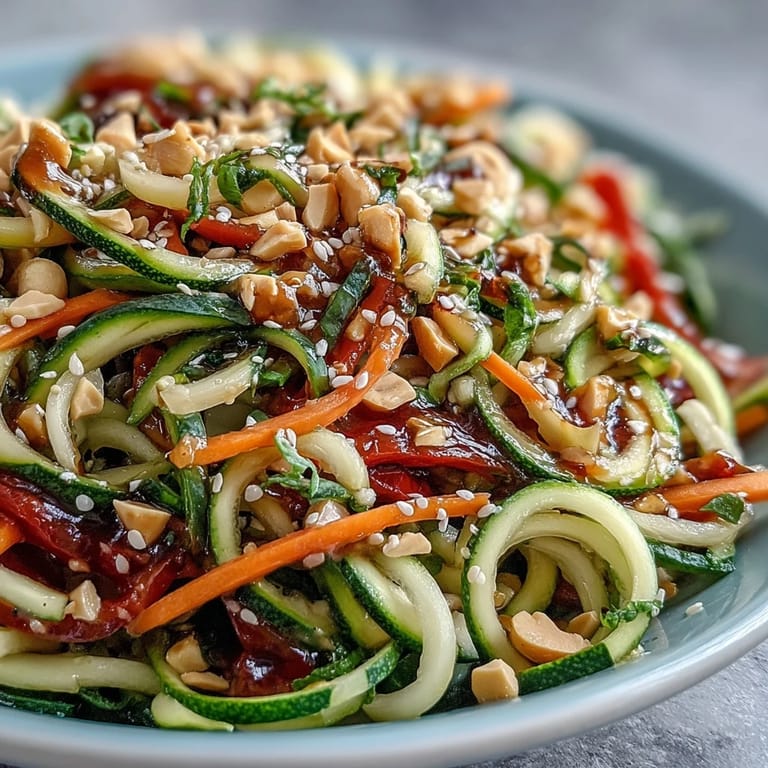
 My friend Sarah showed up at a summer potluck with this gorgeous bowl of spiralized vegetables glistening in a golden dressing, and I spent half the party asking her questions instead of eating anything else. She laughed and said it was something she'd thrown together on a Tuesday afternoon when the farmers market haul was too beautiful to cook, and honestly, that's exactly when the best dishes happen. The way those thin vegetable ribbons caught the light made me realize salads didn't have to be sad or boring—they could be this joyful, crunchy celebration. I've made it dozens of times since, and it's never the same twice because I just use whatever vegetables look good that day. Now it's my go-to when I want something that feels fresh without any fuss.
I made this for a work potluck last spring when everyone was tired of heavy foods, and people actually came back for seconds, which never happens at office gatherings. One coworker asked if I'd bought it from a fancy place, and when I said no, she wanted the recipe immediately—that's the moment I knew this salad was something special. There's something about how the sesame oil smells when it first hits the dressing that makes people lean in closer and pay attention.
Ingredients
- Zucchini, spiralized: Use a firm medium-sized one so the noodles stay crisp and don't weep water into the salad.
- Carrot, spiralized: The sweetness balances the ginger, and it stays firm enough to give you that satisfying crunch.
- Red bell pepper, thinly sliced: Skip the food processor for this one—a sharp knife gives you more control and prettier pieces.
- Red cabbage, shredded: This is your texture anchor; it holds up beautifully and adds a slight peppery note.
- Cucumber, spiralized: Add this just before serving if you're making the salad ahead, or it'll get soft and watery.
- Green onions, thinly sliced: The white and light green parts go into the dressing, and save the dark green for garnish—it looks beautiful and tastes fresher.
- Fresh cilantro, chopped: Don't skip this; it's what makes people say the salad tastes alive.
- Toasted sesame oil: The toasted kind is crucial here; regular sesame oil tastes flat and won't give you that nutty warmth.
- Rice vinegar: It's gentler than regular vinegar and doesn't overpower the delicate vegetables.
- Low-sodium soy sauce or tamari: Tamari is the move if you're keeping it gluten-free, and it actually tastes cleaner.
- Freshly grated ginger: Use a microplane if you have one; it distributes more evenly than mincing and tastes sharper.
- Maple syrup or honey: A tiny bit of sweetness rounds out the dressing and keeps it from tasting one-note.
- Garlic, minced: One clove is all you need—more will overpower everything else.
- Lime juice: Fresh lime, never bottled; it's the difference between bright and bitter.
- Chili flakes, optional: If you like heat, this is where it lives, but it's genuinely optional and the salad is perfect without it.
- Toasted sesame seeds: Toast your own if you can; they taste infinitely better than pre-toasted, and the kitchen smells amazing while you do it.
- Roasted peanuts or cashews, optional: These add protein and crunch, but honestly, the salad stands on its own without them.
Tired of Takeout? 🥡
Get 10 meals you can make faster than delivery arrives. Seriously.
One email. No spam. Unsubscribe anytime.
Instructions
- Spiralize and slice your vegetables:
- Set up your cutting board with your spiralizer ready, and work through each vegetable methodically—zucchini, carrot, and cucumber go through the spiralizer, while the bell pepper and cabbage get a sharp knife. Lay everything out as you go so you can see how vibrant the colors are together.
- Gather everything in your bowl:
- Toss all the spiralized and sliced vegetables into a large mixing bowl without the dressing yet, then add your green onions and cilantro. This is when you can step back and smile at how much fresh produce is sitting in front of you.
- Whisk your dressing together:
- In a separate bowl, start with the sesame oil and rice vinegar, then add the soy sauce, ginger, maple syrup, garlic, and lime juice—whisk it all together until the maple syrup dissolves and everything looks golden and emulsified. Taste it here and adjust the ginger or lime if you want; this is your moment to make it exactly right.
- Dress the salad gently:
- Pour the dressing over the vegetables and toss with your hands or two large spoons, being gentle so you don't break the delicate noodles. You want every piece coated but not drowning—this usually takes about one minute of tossing.
- Let it breathe:
- Set the salad aside for 5 to 10 minutes and let the flavors settle and marry together; the vegetables will soften just slightly and absorb the dressing beautifully. Walk away and do something else; this waiting time is where the magic happens.
- Plate and garnish:
- Transfer to a serving platter or individual bowls, then scatter the toasted sesame seeds, nuts if using, and a fresh handful of cilantro on top. Serve right away while the vegetables still have that satisfying snap.
 Pin it
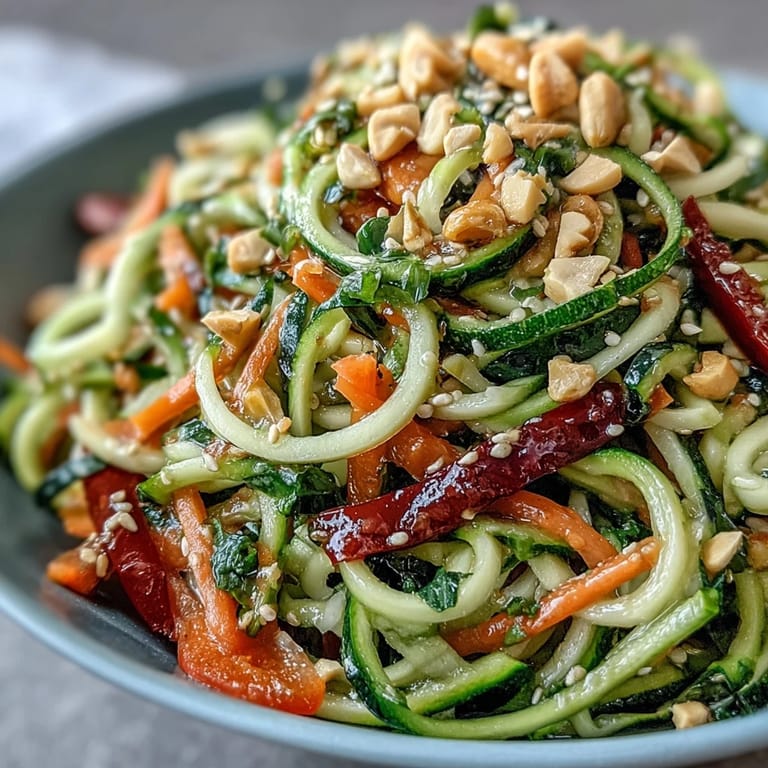
 My mom made this last summer when my sister was visiting with her new partner, and it became this funny moment where everyone was so focused on the food that nobody had to do the usual small talk thing. By the end of the meal, we were all leaning in and sharing bites, trying to decode what made the dressing taste so good. That's when I realized food like this—simple, honest, and made with care—is how you actually get to know people.
What Makes This Dressing Work
The magic is in the balance of three elements: the nutty toasted sesame oil, the brightness of rice vinegar and lime, and the warmth of fresh ginger. Most people skip the ginger or use too little, and that's when a good dressing becomes just okay. I learned this by accident when I was out of rice vinegar and used regular white vinegar instead—the salad tasted sharp and one-dimensional, and I finally understood why the recipe specifies rice vinegar. The maple syrup isn't there to make it sweet; it's there to round out the edges and make the dressing feel complete on your palate.
The Spiralizer Question
You don't actually need a fancy spiralizer for this to work, though if you make it regularly, a decent one is worth the drawer space. I've made it with a julienne peeler before when I couldn't find my spiralizer, and it was still delicious—just a different shape and texture. The point is vegetables cut into long, thin pieces; the tool doesn't matter as much as the intention. What does matter is making sure your vegetables are at room temperature and not soaked, so they stay crisp and don't absorb the dressing like sad sponges.
Make It Your Own
This is one of those recipes that actually gets better when you make it your own rather than follow it exactly. If you have daikon radish or yellow squash, spiral those instead; if you don't like cilantro, skip it or use mint or basil. The bones of the recipe—spiralized vegetables, sesame-ginger dressing, sesame seeds—those stay, but everything else is flexible.
- Add protein like baked tofu, edamame, or leftover shredded chicken if you want this to feel like a complete meal.
- Adjust the chili flakes based on your mood; sometimes I want heat, sometimes I want pure freshness.
- If you're making this for a crowd, keep the dressing and vegetables separate and let people assemble their own bowls so everyone gets the texture they prefer.
 Pin it
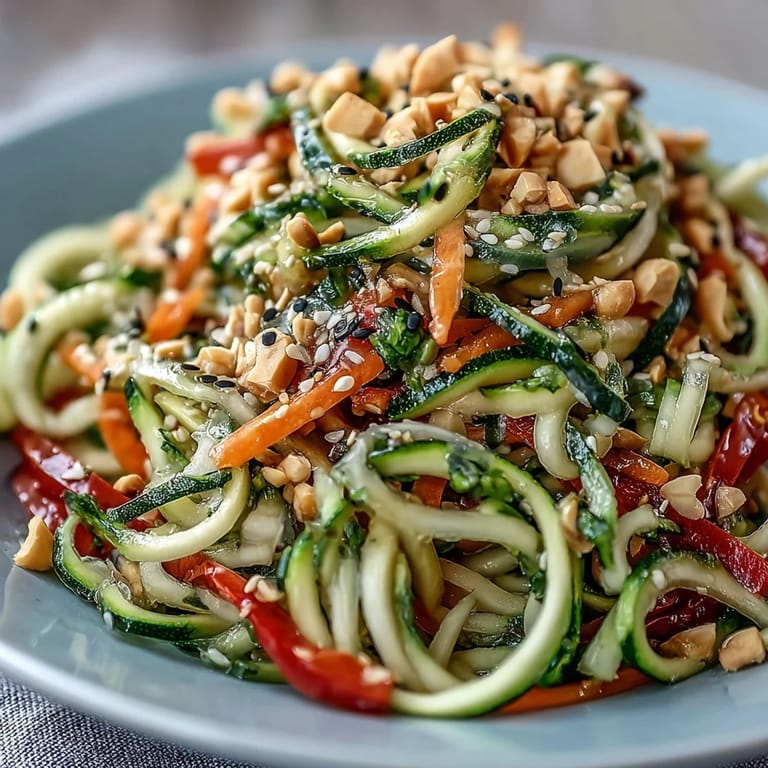
 This salad quietly became one of my favorite things to make when I want to feel like I'm taking care of myself and the people I'm feeding. It asks so little of you but gives back something that tastes and feels like love.
Recipe Q&A
- → Do I need a spiralizer to make this dish?
While a spiralizer creates the most uniform noodle-like strands, you can also use a julienne peeler or mandoline slicer. Alternatively, simply thinly slice the vegetables into strips with a sharp knife—the texture will be slightly different but still delicious.
- → Can I prepare this salad ahead of time?
It's best enjoyed fresh within a few hours of dressing. You can prepare all the vegetables and dressing separately up to 24 hours in advance. Store them in airtight containers in the refrigerator, then toss together just before serving to maintain optimal crunch and texture.
- → What vegetables work best for spiralizing?
Zucchini, carrots, cucumbers, yellow squash, and daikon radish spiralize beautifully. You can also try beets, sweet potatoes, or butternut squash for different flavors and colors. Avoid very soft vegetables like ripe tomatoes, which won't hold their shape well.
- → How can I add more protein to this dish?
Baked tofu, edamame, or cooked chickpeas are excellent plant-based additions. For non-vegetarian options, grilled chicken strips, shrimp, or even flaked salmon work wonderfully. Simply add your chosen protein on top or toss it in with the vegetables before dressing.
- → Is this dish spicy?
The recipe includes optional chili flakes, so you can easily control the heat level. Without them, the dish is mild and savory, with just a gentle warmth from the fresh ginger. Start with a small amount of chili flakes if you're sensitive to spice, then adjust to taste.
- → How long does the dressing keep?
The sesame-ginger dressing will stay fresh in a sealed container in the refrigerator for up to one week. The ingredients may separate slightly—simply give it a good whisk or shake before using. You might need to adjust seasonings after storing as the flavors continue to develop.