 Pin it
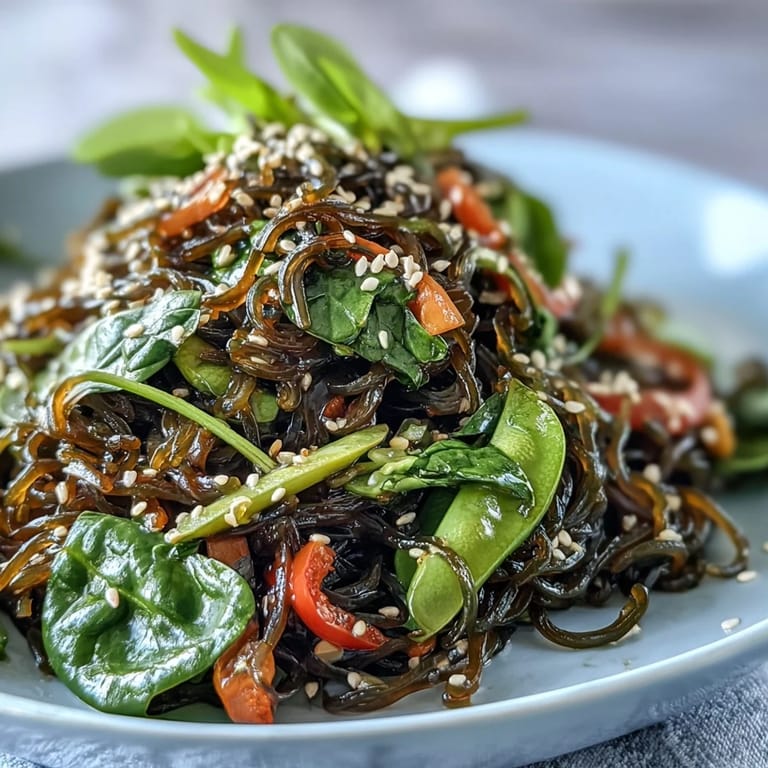
 I discovered kelp noodles by accident at a farmers market on a Saturday afternoon when I was hunting for something lighter to cook with. The vendor handed me a package and said they'd change how I think about noodle dishes, which seemed like bold marketing until I actually tasted them that week. Their subtle oceanic flavor paired with a bright ginger sauce felt like eating something both grounding and energizing at the same time. Now whenever I need a meal that feels indulgent but doesn't weigh me down, this stir-fry is my first instinct.
Last spring I made this for my sister who was recovering from being under the weather, and watching her eyes light up when she realized how much flavor was happening on that plate reminded me why simple, colorful food matters. She kept asking for the recipe the whole time she was eating, fork hovering over her bowl like she couldn't decide what to try next. That's when I realized this isn't just a weeknight meal—it's the kind of dish that makes people feel genuinely cared for.
Ingredients
- Kelp noodles: These seaweed-based strands are delicate but sturdy, holding onto sauce beautifully without becoming mushy, and they bring a mineral quality that makes everything taste fresher.
- Red bell pepper: The sweetness balances the salty-savory sauce, and slicing it thin means it stays crisp rather than turning soft and floppy.
- Snap peas: They provide that satisfying snap you want in a stir-fry, and halving them helps them cook evenly while staying bright green.
- Carrot: Julienning rather than chopping gives you those delicate strands that cook quickly and eat like a texture element rather than chunks.
- Baby spinach: It wilts down instantly and adds iron without any bitterness, making the dish feel more substantial.
- Green onions: Raw green onions scattered at the end keep things lively and add a gentle onion bite that sesame oil would otherwise cover up.
- Tamari or low-sodium soy sauce: The gluten-free version means everyone can eat this, and low-sodium keeps the sauce from overshadowing the vegetables.
- Toasted sesame oil: This is where the warmth comes from—use the dark kind, never the light stuff, because you're looking for that roasted, nutty depth.
- Rice vinegar: It cuts through the richness and keeps everything bright, which is essential when you're building flavor in under 30 minutes.
- Fresh ginger: Finely grated means it dissolves into the sauce and distributes evenly rather than sitting in clumps, warming everything from the inside out.
- Maple syrup or agave: A tiny bit of sweetness rounds out the sauce and prevents it from tasting one-dimensional or harsh.
- Garlic: Minced fine so it softens into the sauce and becomes part of the background flavor rather than standing out as chunks.
- Chili flakes: Optional but worth having on hand—they add an afterthought heat that builds as you eat rather than hitting you right away.
- Toasted sesame seeds: The finishing touch that gives you a little crunch and reminds you that this meal was made with intention.
Tired of Takeout? 🥡
Get 10 meals you can make faster than delivery arrives. Seriously.
One email. No spam. Unsubscribe anytime.
Instructions
- Soften the kelp noodles:
- Soak them in a large bowl of warm water for exactly 10 minutes—they'll go from stiff and curly to pliable and ready to eat. Drain thoroughly in a colander and set aside, and don't skip the draining step or your noodles will dilute the sauce.
- Make the sauce:
- In a small bowl, whisk tamari, sesame oil, rice vinegar, ginger, maple syrup, garlic, and chili flakes together until the sweetness dissolves and everything smells like a restaurant kitchen you want to linger in. Taste it on a spoon and adjust—this is your flavor foundation, so it should taste balanced and slightly bold.
- Sauté the firm vegetables:
- Heat a large nonstick skillet or wok over medium-high heat until it shimmers, then add the bell pepper, snap peas, and carrot all at once. Cook for 3 to 4 minutes while stirring constantly, watching for that moment when they're no longer raw but still have some resistance when you bite down.
- Wilt the greens:
- Toss in the spinach and green onions, stirring for about 1 minute until the spinach transforms from raw leaves into something silky and dark. The whole skillet will smell green and alive at this point.
- Bring it all together:
- Add your drained kelp noodles and pour the sauce over everything, then use tongs or a spatula to toss constantly for 2 to 3 minutes until every noodle is coated and heated through. You'll notice the sauce clings to the noodles and vegetables rather than pooling at the bottom, which means you've done it right.
- Finish and serve:
- Transfer to bowls or plates immediately while everything is still hot and the vegetables still have their brightness. Scatter sesame seeds, cilantro, and lime wedges on top if you're using them, and serve right away so nothing gets cold or soggy.
 Pin it
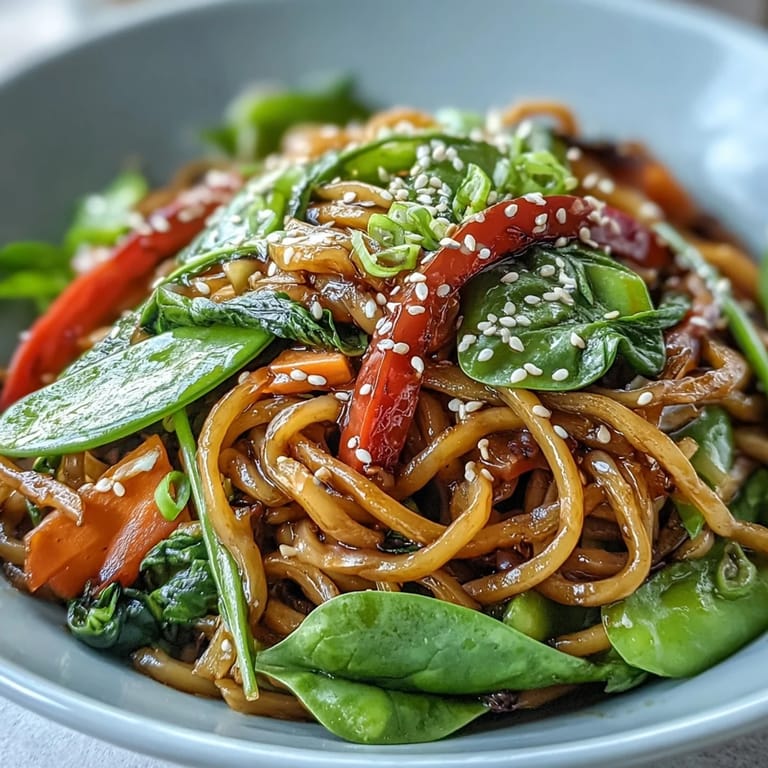
 I made this for a friend's surprise birthday dinner last summer when she'd been craving something flavorful but feeling bloated from heavy meals, and the fact that she went back for seconds told me everything I needed to know about how satiating this actually is. There's something about the combination of crisp vegetables, slippery noodles, and that ginger-spiked sauce that makes you feel full without feeling stuffed, which is a rare and beautiful thing.
Why Kelp Noodles Are Worth Your Time
Kelp noodles aren't trendy health food noise—they're genuinely different from other noodle options in ways that matter when you're cooking. They hold their texture through the entire meal, which means the last bite tastes as good as the first, and their neutral flavor acts like a canvas for whatever sauce or stir-fry you're building around them. I used to think they were just for people doing extreme diet things, but honestly, they're just a better textural choice for lighter meals where you want substance without the heaviness of wheat or rice noodles.
Customizing This for Your Preferences
The beauty of this stir-fry is that it bends easily to what you have on hand or what you're craving that day. Some weeks I swap the bell pepper for broccoli florets, other times I add mushrooms because they brown beautifully in that hot skillet and soak up the sauce like little flavor sponges. The sauce formula stays the same, so you can experiment with the vegetables without having to rethink anything, which makes this a meal you can make twice a week without getting bored.
- Add cubed tofu or edamame if you want extra protein and a more filling main course.
- Try a spoonful of almond or peanut butter stirred into the sauce for a nutty, deeper flavor that feels almost Thai.
- Substitute zucchini, bok choy, or even cauliflower depending on what's in season or what your mood demands.
Sauce Variations That Work
Once you understand the balance of salty-sour-sweet-spicy, you can play with ratios and add-ins without losing the soul of the dish. I've added a splash of coconut aminos when I didn't have tamari, swapped the maple syrup for honey, and even thrown in a tiny bit of sriracha for an extra kick one night when I needed comfort food with attitude. The ginger and sesame oil are the anchors that keep everything recognizable, so as long as those stay put, you have freedom everywhere else.
 Pin it
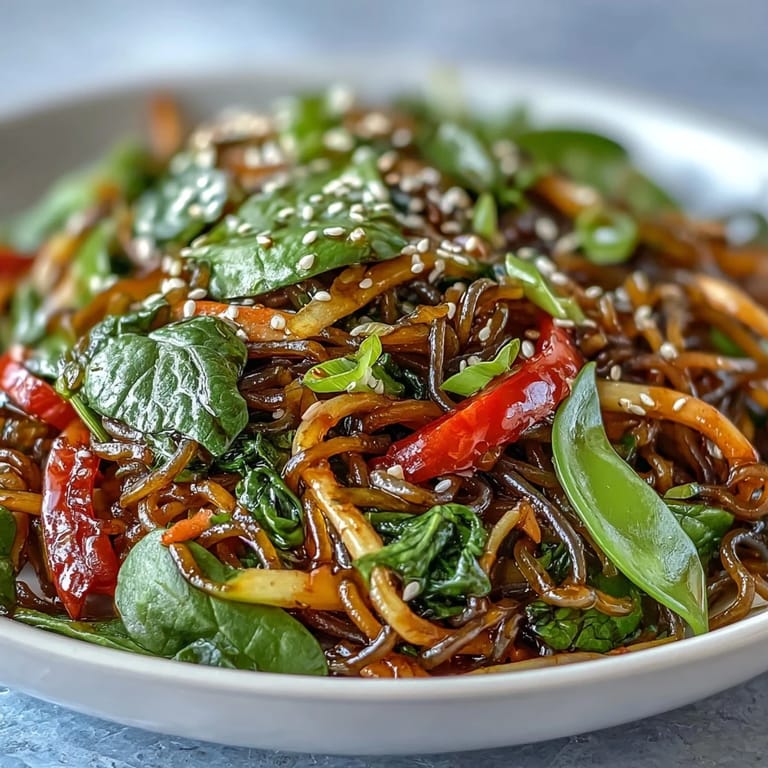
 This stir-fry has become my go-to meal when I want to eat something that feels special without spending an hour in the kitchen or feeling weighted down afterward. Make it once and you'll understand why it's earned so much real estate in my weekly rotation.
Recipe Q&A
- → Do I need to cook kelp noodles?
Kelp noodles don't require traditional cooking. Soaking them in warm water for 10 minutes softens them enough for stir-frying while maintaining their satisfying crunch.
- → Can I add protein to this dish?
Absolutely. Cubed tofu or edamame work perfectly when added during the vegetable sauté step. Shredded chicken or shrimp also complement the Asian flavors.
- → How long do leftovers keep?
Store in an airtight container in the refrigerator for up to 3 days. The noodles will soften further but absorb more sauce flavor. Reheat gently in a skillet.
- → What vegetables work best?
Bell peppers, snap peas, carrots, and spinach provide excellent texture and color. Broccoli, zucchini, mushrooms, or bok choy make great substitutions based on what you have available.
- → Is the sauce spicy?
The sauce has a gentle warmth from fresh ginger and optional chili flakes. It's balanced with maple syrup and rice vinegar. Adjust chili flakes to your preferred heat level.
- → Can I make this soy-free?
Use coconut aminos instead of tamari for a soy-free version. The flavor profile remains similar with a slightly sweeter note from the coconut aminos.