 Pin it
 Tuesday nights used to mean takeout by default, until I started experimenting with sheet pan dinners and realized how little effort it actually takes to have something fresh on the table. There's something almost magical about tossing everything onto one pan and letting the oven do the heavy lifting while you pour a glass of wine and decompress from the day. This particular combination of chicken and spring vegetables came together one evening when I was tired of the same rotation and decided to just use whatever looked good at the farmers market. The result felt so restaurant-quality that I've made it dozens of times since, each season bringing slight variations but always that same satisfying simplicity.
I made this for my neighbor Sarah last spring when she was going through a phase of trying to eat better, and watching her face light up when she realized everything came off one sheet pan was worth more than any complicated recipe could have been. She called me the next week asking for the proportions because her family had devoured the leftovers without her even planning for them. That's when I knew this wasn't just a weeknight shortcut, but something genuinely craveable.
Ingredients
- Boneless, skinless chicken breasts (4, about 1.5 lbs): Look for ones that are roughly the same thickness so they cook evenly, and don't skip patting them dry before the marinade hits.
- Fresh asparagus (1 bunch, trimmed and cut into 2-inch pieces): The woody ends snap off naturally if you bend them gently, and cutting them this size means they'll have time to get tender without turning mushy.
- Cherry tomatoes (1 cup, halved): Halving them exposes more surface area for caramelization, and their sweetness deepens beautifully in the oven's heat.
- Sugar snap peas (1 cup, trimmed): These stay crisp-tender if you don't overcrowd the pan, so give everything breathing room.
- Baby carrots (1 cup, halved lengthwise): Cutting them lengthwise rather than into rounds lets them roast faster and brown more evenly on the cut side.
- Red onion (1 small, sliced into wedges): The sharp bite mellows as it roasts, and the wedges hold together better than thin slices in the heat.
- Yellow bell pepper (1, sliced): Any color works here, but I love the sweetness and visual brightness of yellow against the greens.
- Olive oil (3 tbsp): This is your flavor anchor and what helps everything develop that crucial caramelized edge.
- Fresh lemon juice (2 tbsp): Fresh is non-negotiable here, as bottled juice tastes flat and thin by comparison.
- Garlic cloves (2, minced): Mince them small so they distribute throughout the marinade and don't burn into bitter bits.
- Dijon mustard (1 tsp): This adds subtle depth and helps emulsify the marinade so it clings to everything better.
- Honey (1 tsp): Just enough to balance the acid and help vegetables caramelize, but not so much that it becomes sweet.
- Dried oregano (1 tsp): Dried herbs are actually better here than fresh since they concentrate under heat.
- Dried thyme (½ tsp): A whisper of earthiness that makes people ask what that subtle something is in the flavor.
- Salt and black pepper (½ tsp salt, ¼ tsp pepper): Taste as you go since salt amounts vary depending on your other ingredients.
- Fresh parsley (2 tbsp, chopped): This is your final flourish, adding brightness and color right before serving.
Tired of Takeout? 🥡
Get 10 meals you can make faster than delivery arrives. Seriously.
One email. No spam. Unsubscribe anytime.
Instructions
- Heat your oven and prepare the stage:
- Set the oven to 425°F and line your sheet pan with parchment paper, which saves you from scrubbing later and helps everything brown without sticking. This step takes 30 seconds but changes the entire cleanup equation.
- Build your marinade:
- In a small bowl, whisk together the olive oil, lemon juice, minced garlic, Dijon mustard, honey, oregano, thyme, salt, and pepper until everything is combined and the honey dissolves. You'll notice the mixture becomes slightly thicker and more cohesive as you whisk, which is exactly what you want.
- Coat the chicken generously:
- Place chicken breasts on the sheet pan and brush both sides with half of your marinade, making sure every surface gets hit so the chicken stays juicy as it roasts. Don't be shy with the brush here.
- Dress the vegetables:
- In a large bowl, toss all your prepped vegetables with the remaining marinade until each piece glistens and is evenly coated, then scatter them around the chicken in a single layer. Aim for some space between pieces rather than piling them on top of each other.
- Let the oven do the work:
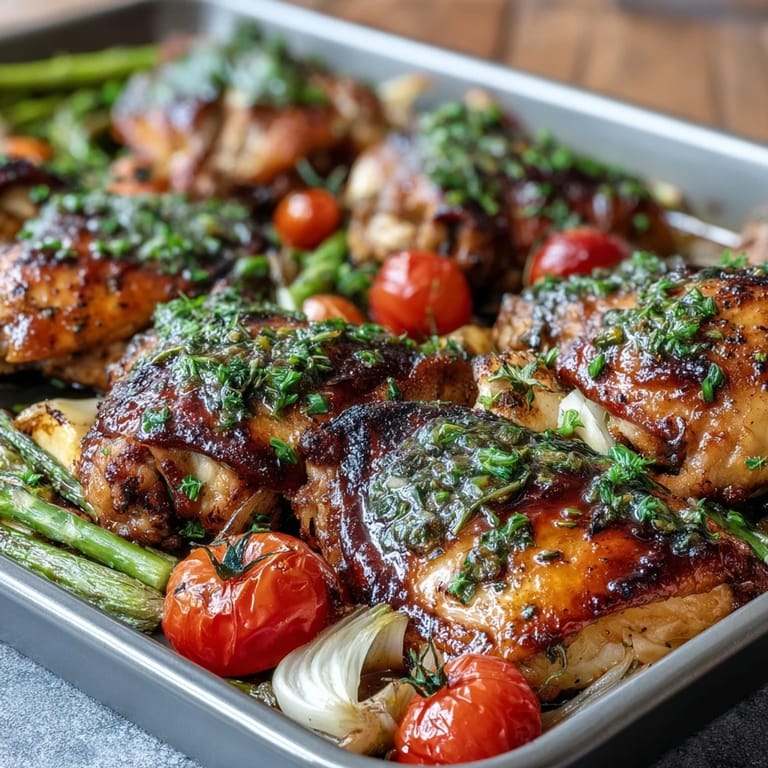
- Roast for 25 to 30 minutes, keeping an eye on things around the 20-minute mark so you can pull it out if your oven runs hot. The chicken is done when it reaches 165°F at the thickest point, and the vegetables should be tender with caramelized edges.
- Rest and finish:
- Let the chicken sit for 5 minutes before serving, which lets the juices redistribute so you don't lose them the moment you cut in. Scatter fresh parsley over everything and squeeze a lemon wedge over the whole pan if you want that final brightness.
 Pin it
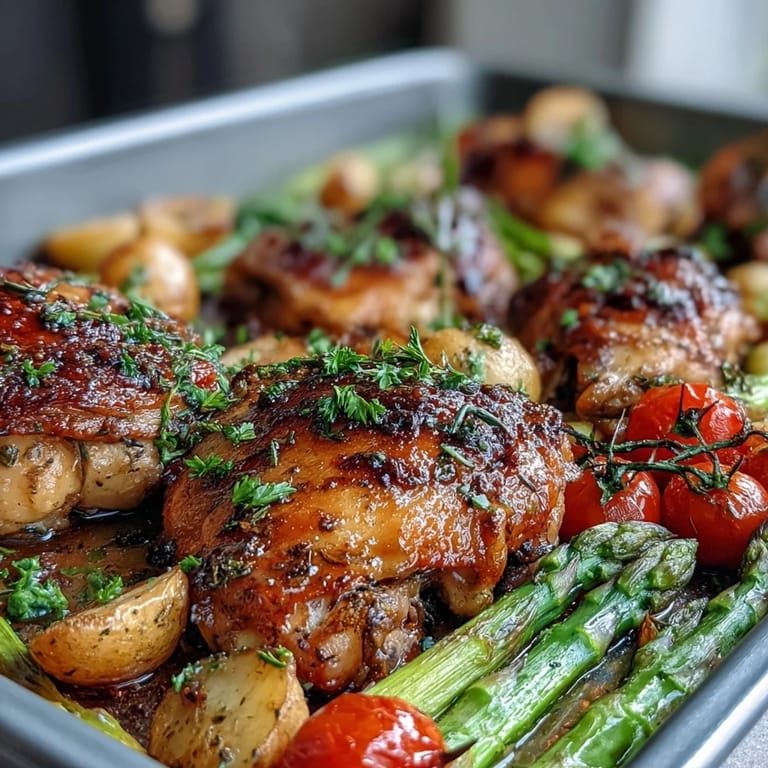
 One Saturday I served this to a friend who'd been watching her weight and was convinced that eating healthy meant eating boring, flavorless food. Watching her visibly relax as she realized the chicken was tender, the vegetables actually had depth, and nothing tasted like deprivation was honestly one of those small kitchen victories that stays with you. Food can be nourishing and delicious at the exact same time, and this dish proves it every single time.
Timing and Temperature Matter
The 425°F temperature is key because it's hot enough to caramelize vegetables and cook chicken through in roughly the same time, whereas a lower temperature would leave you with pale, steamed vegetables waiting for chicken that takes forever to cook. I learned this the hard way on my third attempt when I thought 375°F would be gentler and ended up with rubbery chicken and sad vegetables. Also, oven thermometers are cheaper than therapy, and if yours runs hot or cold, you'll want to know so you can adjust your timing accordingly.
Customizing Without Losing the Magic
The beauty of sheet pan cooking is that you're not locked into this exact vegetable lineup, though I've tried enough variations to know that sticking closer to spring options gives you the best results. Zucchini slices, radishes, and even thin green beans work beautifully, but harder vegetables like full-size potatoes will need a head start before the chicken goes on the pan. I once tried adding mushrooms and roasted them face-down on the pan, which concentrated their earthy flavor in the best possible way, so don't be afraid to experiment once you've made this version a few times.
Storage and Second Meals
Leftovers keep beautifully for three days in the refrigerator, and I've become shameless about packing this into containers for lunch the next day, where everything gets even more flavorful as the marinade continues to do its work. You can eat it cold straight from the container, reheat it gently in a 300°F oven for about 10 minutes if you want it warm, or my personal favorite: slice the cold chicken and toss it with leftover vegetables and a squeeze of lemon juice for a completely different meal that feels fresh and summery.
- Let everything cool to room temperature before refrigerating so you don't create excess steam inside your storage container.
- If the vegetables look a little dry when you reheat, drizzle them with a tiny bit of olive oil and lemon juice to bring them back to life.
- This also makes an excellent base for grain bowls, salads, or wraps the following day if you're looking to stretch the meal.
 Pin it
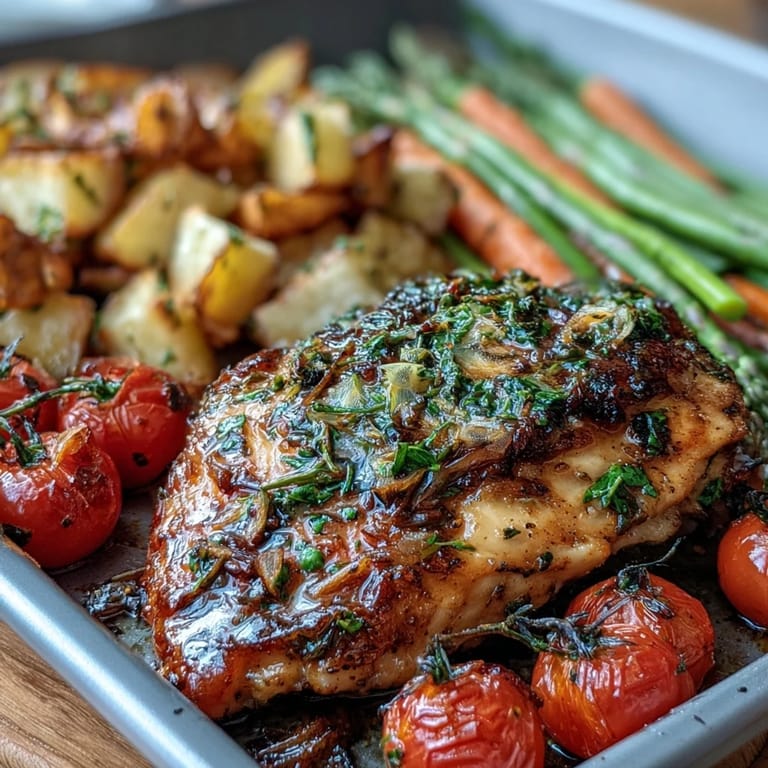
 This recipe has become my answer to the eternal question of what to make when you want something healthy that doesn't feel like punishment. It's proof that weeknight dinner doesn't have to be a choice between convenience and care.
Recipe Q&A
- → Can I use chicken thighs instead of breasts?
Yes, boneless skinless chicken thighs work well and add extra juiciness. Adjust cooking time slightly to ensure thorough cooking.
- → What vegetables pair best with this dish?
Spring vegetables like asparagus, cherry tomatoes, sugar snap peas, carrots, red onion, and bell peppers complement the chicken beautifully.
- → How can I make this dish gluten-free?
All ingredients are naturally gluten-free. Just verify that Dijon mustard and other packaged items do not contain gluten.
- → Is there a way to add more flavor?
Sprinkle crumbled feta cheese on top after roasting or add fresh herbs like parsley or basil for an extra flavor boost.
- → What sides pair well with this meal?
A crisp Sauvignon Blanc or a light rosé pairs nicely. Additionally, simple grains or a fresh green salad complement the dish.
- → Can I prepare this dish ahead of time?
You can marinate the chicken and vegetables a few hours ahead. Keep them refrigerated until ready to roast for maximum flavor.