 Pin it
 The first time I bit into an authentic po'boy, I was standing in a cramped New Orleans kitchen during a sweltering August, watching a cook move with such casual confidence through the frying station that I felt like I was witnessing pure muscle memory. Years later, when I finally recreated one at home, I realized that what made it transcendent wasn't any secret ingredient—it was the crackling shrimp, still warm and golden, collapsing just slightly into cold, buttery rolls. Now whenever I make these sandwiches, I chase that exact moment of contrast, that perfect balance between crispy and tender.
I remember making these for a group of friends who'd never had a real po'boy before, watching their faces as they took that first bite and just went quiet—the good kind of quiet, the kind that means you've nailed something. One friend bit through the crispy coating and just closed her eyes, and that's when I knew this recipe was one worth keeping in regular rotation.
Ingredients
- Large shrimp (1 lb, peeled and deveined): Look for shrimp that smell like the ocean, not ammonia—that's your first quality check, and it makes all the difference in how they fry.
- All-purpose flour (1 cup): This is your base coating, responsible for that initial crunch when you bite through.
- Cornmeal (1 cup): The secret to extra crispiness; it adds texture and fries up golden in ways flour alone simply can't achieve.
- Eggs and buttermilk (2 eggs, 1/2 cup): Together they create a batter that clings beautifully to the shrimp, acting as the glue between coating and seafood.
- Cajun seasoning, paprika, garlic powder (1 tsp, 1/2 tsp, 1/2 tsp): These three work as a unified front, building warmth and depth without overpowering the shrimp's natural sweetness.
- Kosher salt and black pepper (1/2 tsp, 1/4 tsp): Season generously here—the coating needs aggressive seasoning since it's what your mouth tastes first.
- Vegetable oil for frying: Use a neutral oil with a high smoke point; peanut oil works beautifully if you can find it.
- Soft French rolls or hoagie buns (4): These are the backbone of your sandwich—look for rolls with a crispy exterior and pillowy interior that won't fall apart under the weight of toppings.
- Iceberg lettuce (1 cup, shredded): Don't skip the iceberg; its crisp, watery texture contrasts perfectly with the fried shrimp in ways that fancy lettuces simply won't.
- Tomatoes (2 medium, sliced): Use tomatoes at room temperature for maximum flavor and juice, not straight from the refrigerator.
- Mayonnaise (1/2 cup): This is your creamy anchor—it should taste good on its own, so don't cheap out here.
Tired of Takeout? 🥡
Get 10 meals you can make faster than delivery arrives. Seriously.
One email. No spam. Unsubscribe anytime.
Instructions
- Dry and prepare the shrimp:
- Pat each shrimp thoroughly with paper towels—excess moisture is the enemy of crispiness. While they're drying, whisk together your eggs and buttermilk in one bowl until the mixture looks pale and frothy.
- Build your breading station:
- In another bowl, combine flour, cornmeal, Cajun seasoning, paprika, garlic powder, salt, and pepper, mixing with a fork to break up any lumps. This is your flavor foundation, so make sure everything is evenly distributed.
- Coat each shrimp:
- Take one shrimp, dunk it completely into the egg mixture, then drop it into your flour-cornmeal mixture and turn it with your fingers until every surface is coated in a thick, even layer. Set each coated shrimp on a plate as you finish—this little breather lets the coating set slightly.
- Get your oil ready:
- Pour about 2 inches of vegetable oil into a deep skillet or Dutch oven and heat it to 350°F, checking with a thermometer for accuracy. The temperature matters here; too cold and your shrimp will absorb oil instead of crisping; too hot and they'll burn before cooking through.
- Fry the shrimp in batches:
- Working with no more than half the shrimp at a time so the oil stays hot, slide them carefully into the oil and listen for that immediate aggressive sizzle. They're done when they're golden brown and float slightly, about 2 to 3 minutes total, then transfer them to a paper towel-lined plate where they'll continue to drain.
- Toast and dress the rolls:
- Slice your French rolls open lengthwise, leaving a small hinge so they don't fall apart completely. If you're using hot sauce, mix it into your mayonnaise now, then spread a generous layer on both inside surfaces of each roll.
- Assemble your sandwiches:
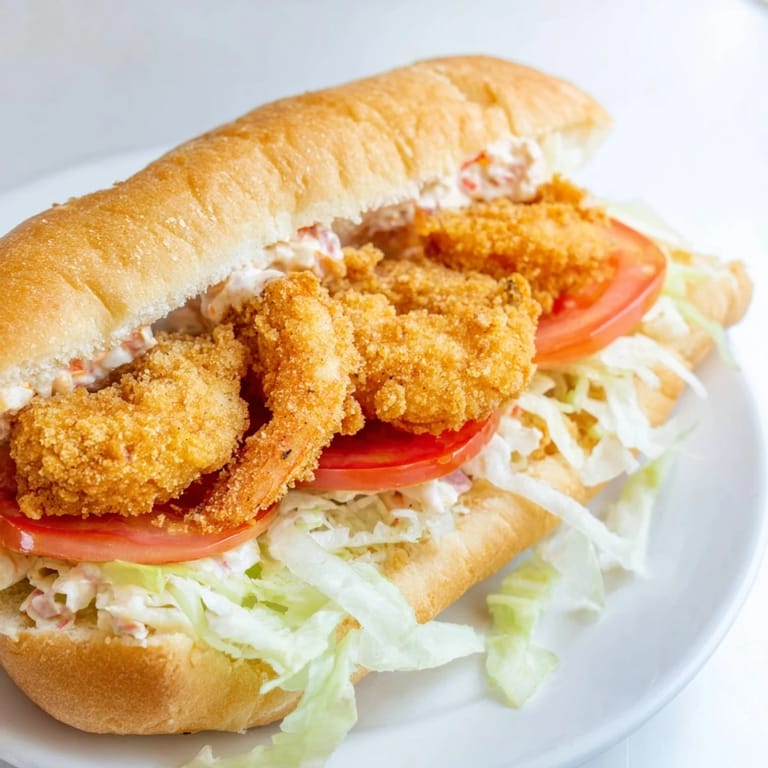
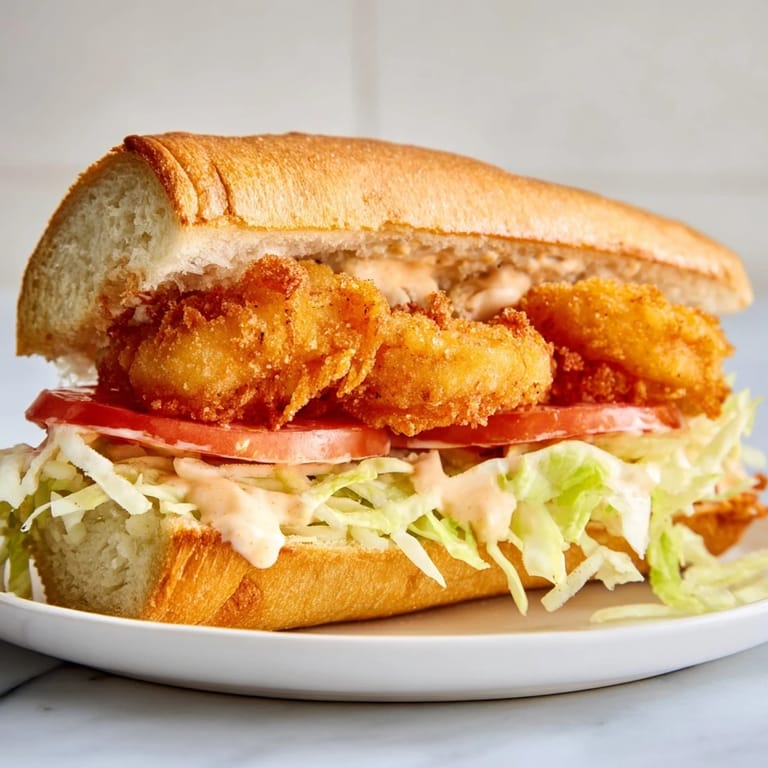
- On the bottom half of each roll, layer a handful of shredded lettuce first as a moisture barrier, then arrange your tomato slices in a single layer, then crown it all with a handful of the still-warm fried shrimp. If you're adding pickle slices, tuck them in now.
- Finish and serve:
- Press the top of the roll down gently—not hard enough to crush anything—and serve immediately with lemon wedges on the side so people can squeeze them over their sandwich if they want that brightness.
 Pin it
 There's something almost ceremonial about eating a po'boy fresh off the fryer, the way the shrimp still has heat in it and the roll still has some give. I had a moment once where a guest took that first bite and got breading fragments all over themselves, and instead of being embarrassed, we all just laughed because that's exactly what should happen—these sandwiches demand your full attention and give back this joyful mess in return.
The Crispy-Coating Secret
The cornmeal is doing real work here that flour alone couldn't do—it fries up harder and crunchier, creating a coating that stays crispy even as the shrimp inside releases its moisture. I learned this after making dozens of versions and comparing them side by side, and it's one of those discoveries that changes how you approach fried foods forever. If you ever find yourself making fried fish or chicken or anything else that needs aggressive crispiness, remember that cornmeal is your friend.
Seasoning Strategy
The coating is doing almost all of the seasoning work in this sandwich because it's what your mouth encounters first and most intensely. The shrimp themselves should be fairly neutral—just salty—so the spice and warmth comes from that crispy exterior, and the mayonnaise and other toppings provide contrast and richness. I've seen people try to season the shrimp themselves before breading and it throws off the whole balance, making the final sandwich taste muddy instead of layered.
Building the Perfect Bite
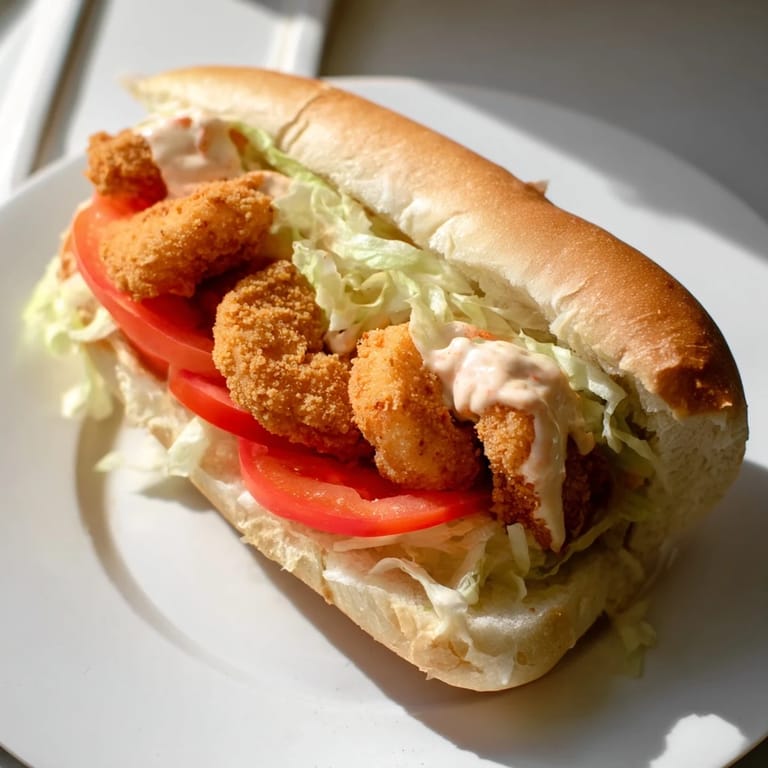
The order of your layers matters more than you'd think, and I learned this the hard way by making soggy sandwiches before understanding how tomato juice migrates. Put your lettuce down first so it acts as a moisture barrier, then tomato, then shrimp on top where it's warmer and will stay crispy longer. The mayonnaise on the top bun also matters—that creamy layer above the shrimp keeps them from softening as quickly as they would if they were pressed directly against bread.
- Layer in this exact order: lettuce first on the bottom bun, then tomato slices, then warm fried shrimp, which means the heat stays closest to the crispy coating.
- If you're adding pickles or hot sauce, put them on top of the shrimp where their moisture won't affect the breading.
- Serve immediately after assembling, with lemon wedges on the side so people can add brightness to taste.
 Pin it
 This sandwich is the kind of food that makes you slow down and pay attention, that demands you be present with what you're eating. Once you've made it once and tasted how good it can be fresh from your own kitchen, you'll find yourself craving it on ordinary Tuesdays.
Recipe Q&A
- → What type of shrimp works best for this sandwich?
Large shrimp peeled and deveined provide the best texture and flavor for a crispy bite.
- → Can I bake or air-fry the shrimp instead of frying?
Yes, baking or air-frying offers a lighter alternative while still delivering a crispy exterior.
- → What seasoning blend is used for coating the shrimp?
A mix of Cajun seasoning, paprika, garlic powder, salt, and black pepper creates a spicy, aromatic crust.
- → Which bread types are ideal for this sandwich?
Soft French rolls or hoagie buns hold the fillings well without overpowering the shrimp’s flavor.
- → How can I add extra zest to the sandwich spread?
Mixing Creole mustard or substituting remoulade sauce enhances tang and spice in the mayonnaise.
- → Are there suggested side dishes to serve alongside?
Kettle chips or French fries complement the sandwich with added crunch and comfort.