 Pin it
 The first time I encountered capirotada, I didn’t recognize it by name, but the scent of toasted bread mingling with cinnamon and piloncillo was unmistakable. The kitchen was alive with chatter&—my aunt was telling stories, and the syrup simmered away, filling the air with warmth. As I watched her assemble the layers, each ingredient seemed to hold some secret, and I knew this dessert was more than just bread pudding. It was a celebration&—rich, hearty, and slightly mysterious. Even now, making it feels like unlocking a memory you didn’t know you had.
Not long ago, I made capirotada for a friend’s family dinner during Lent&—the conversation revolved around childhood traditions and everyone had a different method for layering. At the table, laughter bloomed as someone accidentally took two servings of the coconut-topped corner. Making this dessert together proved it’s as much about sharing as it is about taste.
Ingredients
- Bread: Slightly stale bolillo or French bread lends structure and absorbs syrup without turning to mush&—slicing it thick works best.
- Piloncillo: Authentic Mexican sugar gives depth and caramel notes&—dark brown sugar is an easy substitute when piloncillo is hard to find.
- Cinnamon stick: Whole sticks release fragrant oils in the syrup&—don’t swap for ground unless necessary.
- Cloves: Three whole cloves bring a gentle spice&—remove them well to avoid unexpected bites.
- Raisins and dried fruit: They deliver bursts of sweetness and chewy texture&—try apricots, prunes, or even chopped apples for more flavor.
- Shredded cheese: Queso fresco or Monterey Jack melt smoothly&—a sprinkle on every layer gives little pockets of creaminess.
- Nuts: Pecans, peanuts, and almonds offer crunch&—toasting before layering makes the flavor pop.
- Sweetened coconut flakes: Adds a subtle tropical note&—totally optional, but fun for texture.
- Butter: A drizzle over the top helps everything turn golden and bubbly&—melt it first for even coverage.
Tired of Takeout? 🥡
Get 10 meals you can make faster than delivery arrives. Seriously.
One email. No spam. Unsubscribe anytime.
Instructions
- Prep the bread:
- Slice your loaf thickly, then arrange the slices on a baking sheet. Toast them in the oven until they are golden, flipping halfway&—my kitchen always smells like a bakery at this step.
- Simmer the syrup:
- In a saucepan, combine water, piloncillo, cinnamon, and cloves&—let the aroma guide you, simmering until it’s thick and dark. Strain the syrup to catch the spices, so every mouthful is smooth.
- Layer the magic:
- Butter your baking dish, then layer one-third of the bread. Scatter nuts, raisins, dried fruit, and cheese, repeating twice&—don’t fret if some pieces overlap, each bite will be unique.
- Saturate and finish:
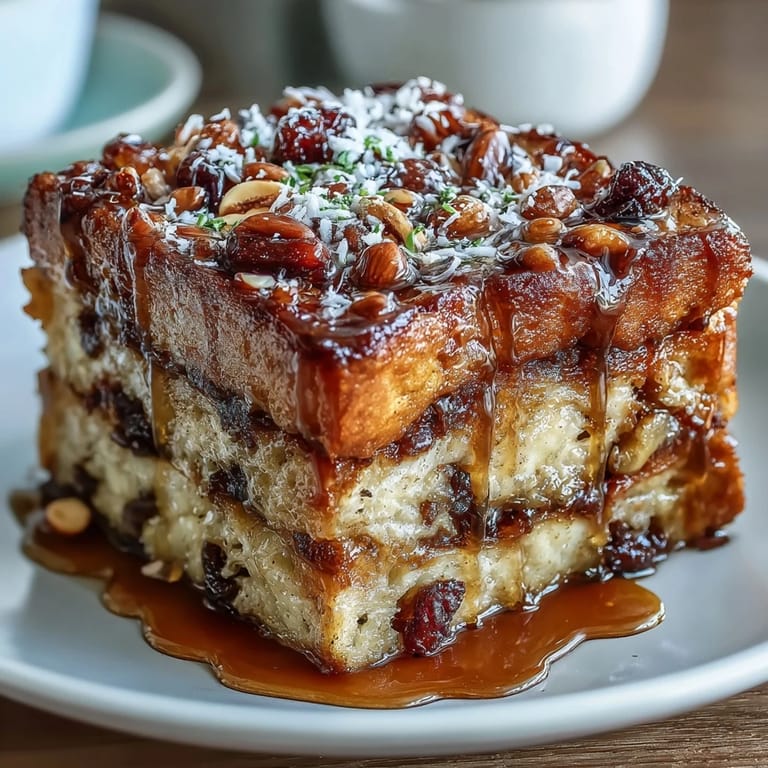
- Pour the syrup slowly over the bread, ensuring all layers are moist. Drizzle melted butter and sprinkle coconut flakes if you like—this step is when the anticipation starts to build.
- Bake to golden perfection:
- Cover with foil and bake, then uncover for the final golden bubbling finish. Let it rest at least 15 minutes—waiting makes it irresistible.
 Pin it
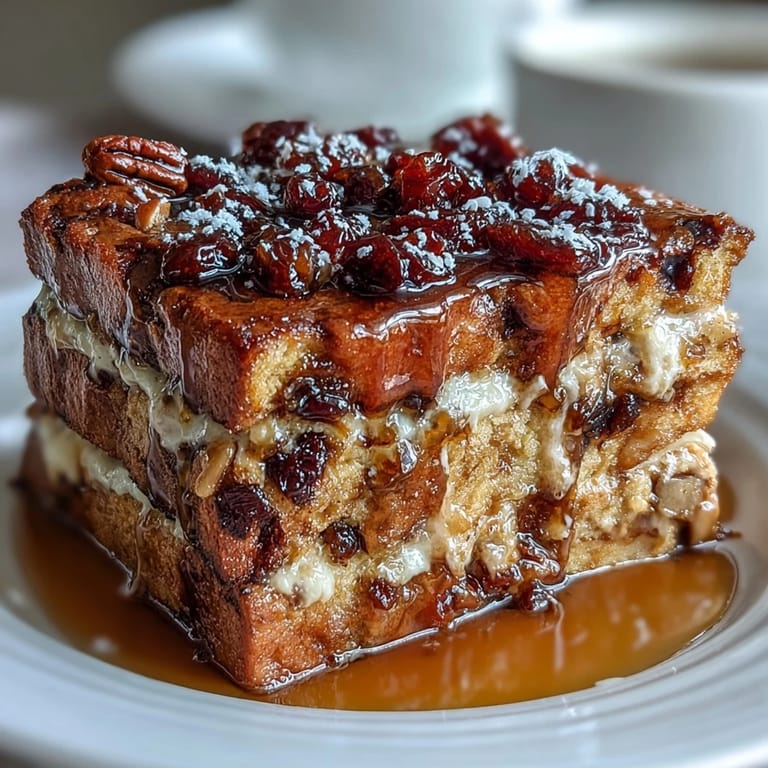
 After serving capirotada to my family, I noticed how quickly conversation shifted from who brought what to the flavors—someone commented that the combination of salty cheese and piloncillo made them rethink desserts entirely. It was that moment, the empty plates and lingering aroma, that transformed this recipe into a touchstone for togetherness rather than just a sweet treat.
How to Toast Bread for Capirotada
Toasting bread isn’t just about color&—it’s about getting the slices dry enough to hold their shape when layered. I find that flipping halfway through gives an even, crisp texture, and sometimes I sneak a slice while prepping because the crunch is irresistible.
Choosing Your Dried Fruit
Some days, I add prunes; other days, apricots or apples&—each variation changes the pudding’s personality a little. Over time, I’ve learned that raisins always give a comforting sweetness but mixing in something tangy makes for an unexpected twist.
Layering Tricks for the Perfect Texture
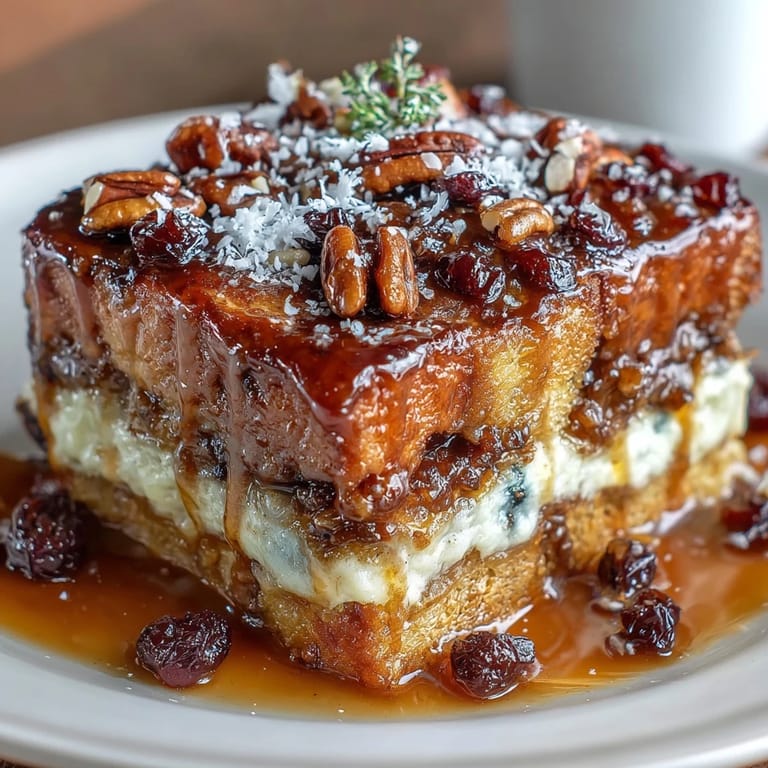
Making capirotada is easier if you pay attention to moisture&—don’t flood the bread too quickly, and scatter nuts & cheese evenly for pockets of flavor. I always finish with nuts on top so they toast in the oven.
- Use a spoon when pouring syrup for controlled coverage.
- Let baked pudding rest—cutting too soon ruins the layers.
- If you’re serving leftovers, reheat gently to avoid drying out.
 Pin it
 If you take a moment to appreciate the layers before slicing, the colors and textures feel like a celebration. Every forkful is a reminder of how the simplest ingredients can become a comforting masterpiece.
Recipe Q&A
- → What type of bread works best?
Bollilo or French bread, slightly stale, gives the best texture and absorbs syrup well.
- → Can different cheeses be used?
Mild cheese such as queso fresco, Monterey Jack, or mozzarella all work well for creamy melt.
- → How is piloncillo syrup made?
Simmer piloncillo in water with cinnamon and cloves to create an aromatic syrup with a deep flavor.
- → Are there nut-free options?
Skip nuts or substitute with seeds if you prefer a nut-free version, while still maintaining crunch.
- → Can fruit variations be added?
Bananas, apples, dried apricots, or prunes can offer more fruity flavors and additional texture layers.
- → How should it be served?
Enjoy warm or at room temperature, optionally paired with vanilla ice cream or Mexican hot chocolate.